
ICE Agents Will Have No Operational Role at Olympics
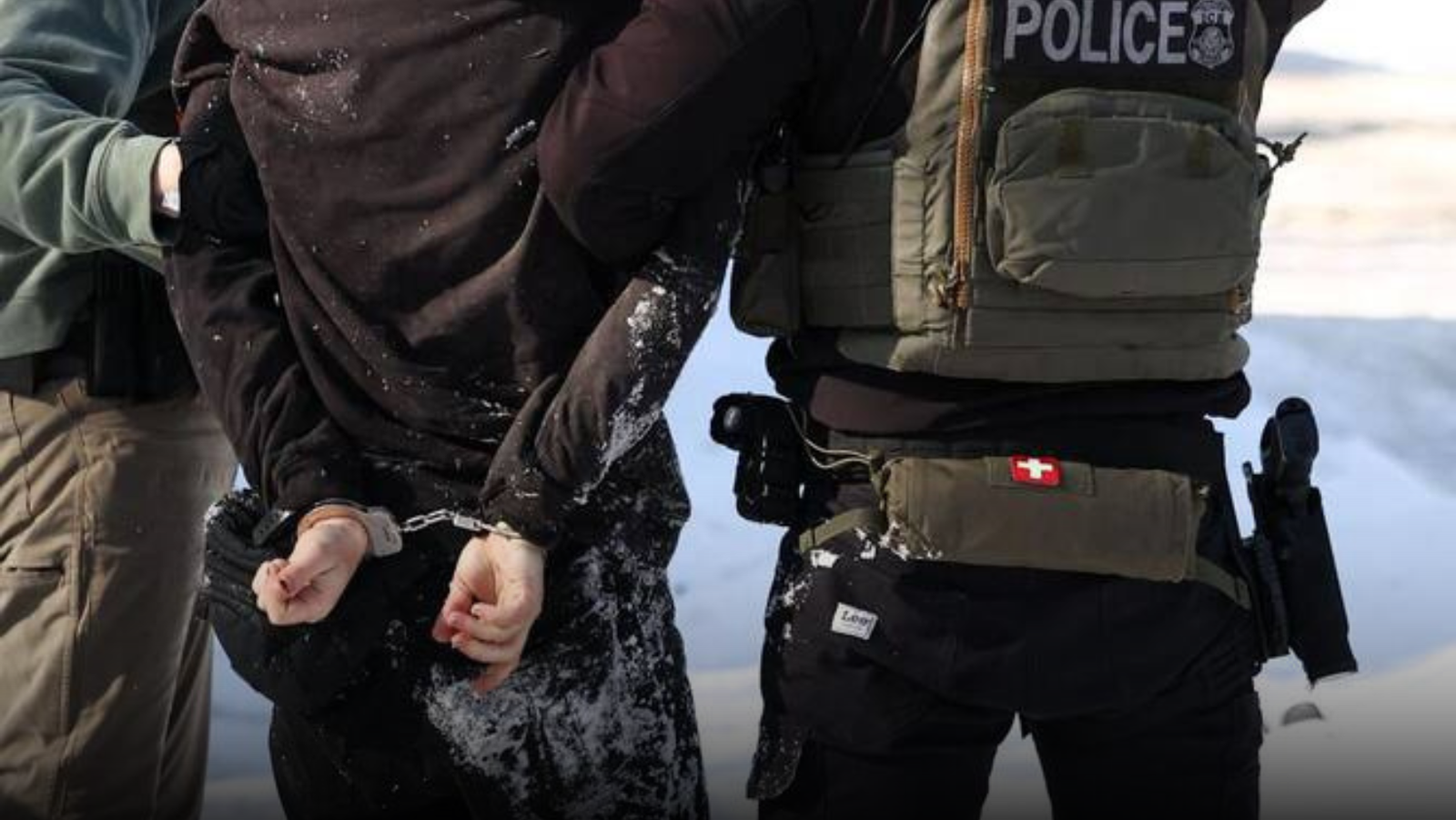
Italy Confirms HSI Will Not Perform Policing Duties at 2026 Winter Games
Italy has confirmed that agents from the U.S. immigration enforcement agency will have no operational role at the Milan‑Cortina Winter Olympics, addressing public criticism and misperceptions about their presence at the international sporting event.
Interior Minister Matteo Piantedosi told lawmakers Wednesday that officers from U.S. Immigration and Customs Enforcement (ICE) — specifically from its Homeland Security Investigations (HSI) branch — will be present only in a limited capacity tied to diplomatic missions, and they will not engage in policing or operational duties during the February 6–22 Games.
Piantedosi’s clarification comes after weeks of debate in Italian political and civic circles, where opponents expressed concern over reports of ICE agents attending the Olympics. Milan’s mayor and several local figures had previously voiced opposition to their presence, prompting national authorities to publicly restate the limited scope of U.S. involvement.
Clarifying Roles: ICE vs HSI at International Events
The debate stems from confusion between ICE’s immigration enforcement wing — known for domestic policing — and HSI, its investigative division that handles transnational crimes such as financial fraud, cyber crime, and human trafficking. Piantedosi emphasized that neither ICE agents nor HSI personnel will carry out law enforcement actions on Italian soil during the Games.
“HSI agents are not operational agents and have no executive function here,” Piantedosi told parliament. “Their role is strictly confined to activities within the jurisdiction of U.S. diplomatic facilities, and they will not participate in policing or security enforcement at Olympic venues.”
This distinction is important because the presence of any U.S. federal agency at a high‑profile event in Europe raised questions about sovereignty, security cooperation, and diplomatic norms. Italian officials moved to reassure citizens and athletes that the Games’ security will be overseen by local and national authorities, with international cooperation grounded in mutual agreements rather than unilateral deployments.
Public Reaction and Political Debate in Italy
The announcement that ICE agents will have no operational role at the Milan‑Cortina Winter Olympics was welcomed by critics who feared outside influence on Italian civic space. Earlier statements from Milan’s mayor had described the idea of U.S. enforcement personnel operating in Italy as “inappropriate” and “unnecessary,” given the presence of Italian police, Carabinieri, and Olympic security forces.
Opposition politicians and civil rights groups had argued that even a symbolic deployment could be perceived as an infringement on national jurisdiction. They called for clarity to avoid public concern and misinformation. Piantedosi’s confirmation was designed to address those concerns directly, framing the matter as a misunderstanding of the role of HSI personnel.
“In a context where passion runs high, particularly around an event of this magnitude, we must ensure that security roles are clear and that no external agency is interpreted as taking Italian authority,” he said.
While some critics remain skeptical, the broader Italian response appears to be one of cautious acceptance following official clarification. Others have noted that international cooperation in security matters is common for large events, but it must always respect the legal frameworks and protocols of the host country.
Security Arrangements for the Milan‑Cortina Winter Olympics
Italy’s Ministry of the Interior has been preparing for security at the 2026 Winter Olympics for months, deploying thousands of personnel from multiple agencies. Coordination includes national police, military units, local law enforcement, and international partners. Planning covers venue security, crowd control, emergency response, and cyber defense.
Olympic security is informed by lessons from previous Games, which often involve multi‑agency cooperation. However, host nations typically retain control over operational command. In this context, the Minister’s assurance that ICE agents will have no operational role is consistent with international norms.
Italy has also coordinated with the International Olympic Committee and European law enforcement bodies to ensure a safe environment for athletes, spectators, and residents alike. While HSI’s presence in a diplomatic context may involve liaison work, it will not extend to patrols, arrests, or any enforcement action at Olympic facilities.
Understanding the Roles of U.S. Agencies Abroad
ICE is a U.S. federal agency responsible primarily for immigration enforcement and internal security within the United States. Its operations include removal actions, border enforcement, and investigation of cross‑border crime. HSI, a division of ICE, focuses on transnational crime, often coordinating with foreign partners on issues such as trafficking, smuggling, and financial crime.
Under international law, foreign law enforcement agencies do not conduct domestic policing in a host country unless explicitly authorized by treaty or bilateral agreement. Piantedosi’s confirmation aligns with this principle, ensuring that Italy maintains authority over security operations while accommodating limited liaison functions for U.S. officials.
Official statements clarified that HSI personnel present in Italy will operate within the confines of U.S. diplomatic facilities, focusing on matters related to their own personnel, travel, or consular affairs. This model mirrors how many nations staff law enforcement professionals abroad without granting them enforcement powers in the host state.
International Cooperation and Respect for Sovereignty
Experts say that transparency about roles and responsibilities is critical in large international events like the Olympics. “Security cooperation can be very effective when each partner understands and respects the limits of its involvement,” said an Italian security analyst. The recent clarity from Piantedosi helps prevent misconceptions that could undermine trust between citizens and authorities.
The Milan‑Cortina Winter Olympics promises to draw athletes and visitors from around the world, making security planning a top priority. Italian officials have repeatedly emphasized that Olympic security is an Italian responsibility, supported by international intelligence sharing and cooperation, but always under Italian command.
Looking Ahead to the Games
With the Winter Games just months away, Italian authorities continue to refine security measures, emergency preparedness, and diplomatic coordination. Piantedosi’s statement that ICE agents will have no operational role at the Milan‑Cortina Winter Olympics aims to reassure the public and international community that security protocols respect national sovereignty and legal norms.
As the Games approach, officials are expected to release additional information on specific security arrangements, including technologies deployed, inter‑agency cooperation frameworks, and contingency plans. For now, the focus remains on ensuring a safe, secure, and smoothly conducted event for all participants.
For the latest updates on international event security, diplomatic coordination, and Italy’s preparations for the 2026 Winter Olympics, follow ongoing coverage on Time of Gulf.