
US Sanctioned Supertankers Enter Gulf Blockade Amid Rising Strait of Hormuz Tensions
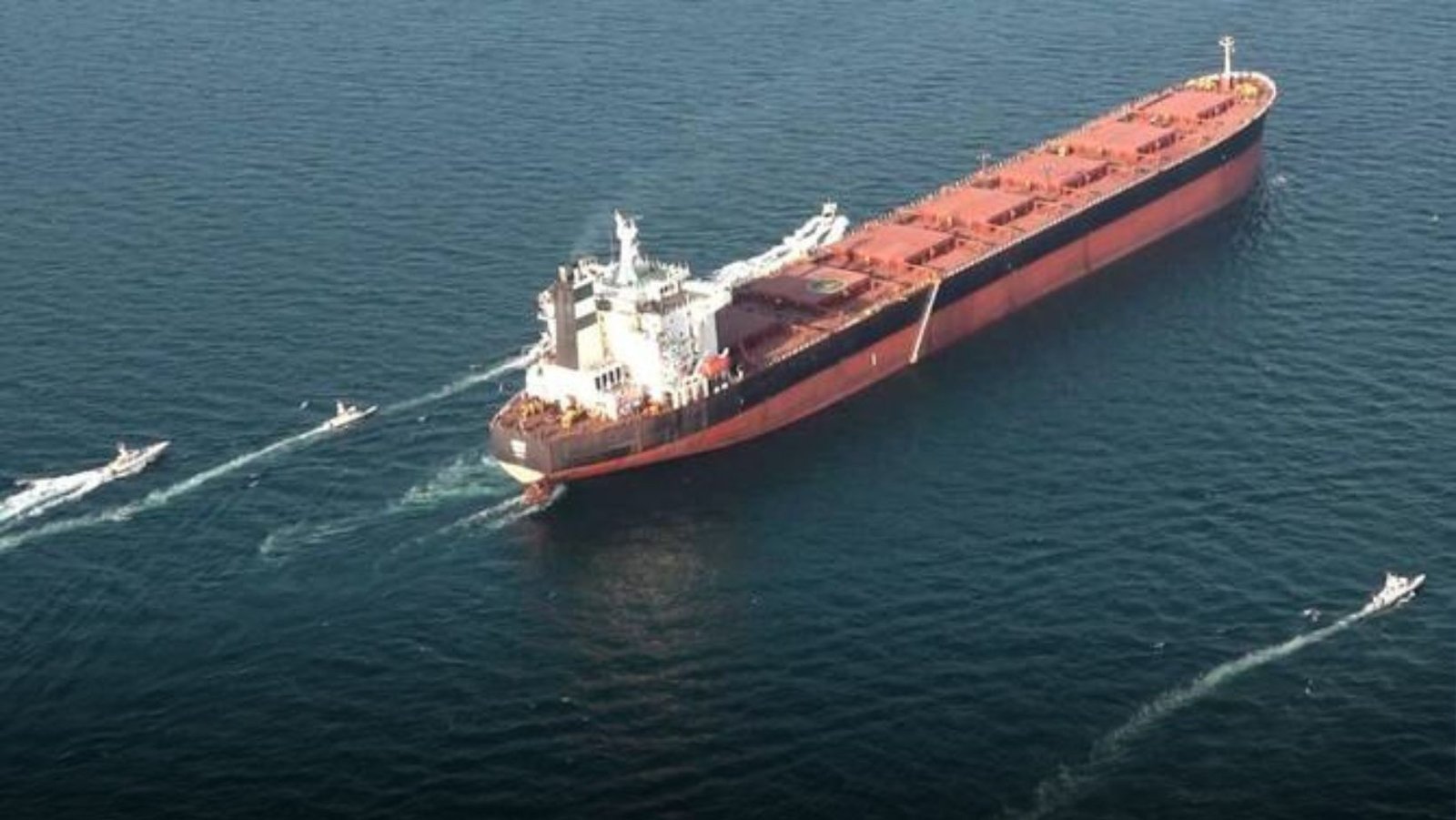
US Sanctioned Supertankers Enter Gulf Blockade Raises Maritime Security Concerns in Global Oil Trade
Supertankers enter Gulf despite US blockade escalation
US Sanctioned Supertankers Enter Gulf Blockade has intensified geopolitical tensions in the Middle East after shipping data confirmed that multiple large crude carriers entered the Gulf despite newly imposed US restrictions targeting vessels linked to Iranian oil transportation routes. The development has raised fresh concerns over maritime enforcement, regional security, and global energy stability.
The situation developed after diplomatic negotiations between the United States and Iran failed to produce any agreement, prompting Washington to announce stricter maritime monitoring and blockade measures. Analysts say US Sanctioned Supertankers Enter Gulf Blockade reflects the immediate impact of these policy changes on global shipping flows.
Despite increased surveillance, at least one Very Large Crude Carrier (VLCC) was tracked entering the Gulf, highlighting ongoing challenges in enforcing sanctions across international waters.
Strait of Hormuz becomes critical point of global energy tension
The Strait of Hormuz remains one of the most strategically important shipping routes in the world, and US Sanctioned Supertankers Enter Gulf Blockade has once again placed it at the center of global attention.
This narrow waterway handles a significant share of global oil transportation, making it highly sensitive to geopolitical disruptions. Shipping intelligence data shows that tanker movements continue through the region despite heightened monitoring and political pressure.
Experts warn that any disruption in this corridor can immediately affect global oil prices, shipping insurance costs, and energy supply chains. The repeated appearance of sanctioned vessels has intensified scrutiny of enforcement capabilities in the region.
US Iran tensions escalate after failed diplomatic negotiations
The escalation follows unsuccessful diplomatic talks between Washington and Tehran, which failed to reach an agreement on sanctions relief and maritime access.
Following the breakdown, the United States implemented stricter measures aimed at limiting vessels linked to Iranian crude exports. US Sanctioned Supertankers Enter Gulf Blockade reflects how quickly maritime policy changes are impacting global trade routes.
Iran, however, continues to maintain that its oil exports will remain operational despite external pressure, relying on storage facilities, alternative shipping routes, and regional trade partnerships.
Officials suggest that both sides remain firm in their positions, increasing uncertainty in the region.
Oil tanker movements continue despite enforcement measures
Shipping data indicates that large crude carriers, including Very Large Crude Carriers (VLCCs), continue to move through the Gulf region despite surveillance and restrictions.
US Sanctioned Supertankers Enter Gulf Blockade highlights the difficulty authorities face in tracking and controlling commercial shipping in heavily trafficked maritime zones.
Some vessels appear to follow indirect or delayed routing patterns, making enforcement more complex for monitoring agencies. Analysts say this shows the adaptability of global oil logistics even under geopolitical pressure.
The continued movement of tankers demonstrates that enforcement alone may not immediately disrupt established energy trade flows.
Iran oil exports remain under sustained pressure
Iran’s oil export sector is facing increasing pressure as the blockade aims to reduce its ability to transport crude through key maritime routes.
However, reports indicate that Iran continues to sustain production levels using onshore storage and regional distribution networks to manage output.
US Sanctioned Supertankers Enter Gulf Blockade is therefore part of a broader strategy designed to restrict Iran’s energy revenue while maintaining diplomatic leverage.
Energy analysts note that while exports may fluctuate, complete disruption is unlikely in the short term due to alternative logistical arrangements.
Global energy markets react to rising Gulf uncertainty
International energy markets are closely monitoring developments in the Strait of Hormuz as even minor disruptions can trigger volatility in crude oil prices.
US Sanctioned Supertankers Enter Gulf Blockade has already become a key reference point for traders assessing risk in global oil supply chains.
Insurance premiums for tanker routes in the region are also expected to rise if tensions continue, increasing costs for shipping companies and energy importers.
Experts warn that prolonged uncertainty could affect long-term investment decisions in the global energy sector.
Maritime enforcement challenges in high-traffic waters
The ongoing situation highlights major challenges in enforcing maritime sanctions in international waters where commercial traffic is dense and jurisdiction is complex.
Despite satellite tracking systems, naval monitoring, and intelligence sharing, vessels can still navigate through the Gulf under changing identifiers or routing adjustments.
US Sanctioned Supertankers Enter Gulf Blockade underscores these limitations and raises questions about the effectiveness of current enforcement mechanisms.
Authorities continue to monitor vessel behavior closely, but complete control over maritime movement remains difficult.
Regional security and diplomatic uncertainty increase
The situation has also contributed to rising regional uncertainty, with Gulf shipping routes becoming increasingly sensitive to political developments.
US Sanctioned Supertankers Enter Gulf Blockade reflects not only an energy issue but also a broader geopolitical challenge involving diplomacy, security, and global trade stability.
Regional stakeholders are closely observing developments, as any escalation could have wider implications for economic and security conditions.
Conclusion: Strait of Hormuz remains under pressure
The Strait of Hormuz continues to remain a critical pressure point in global energy geopolitics as tensions between the United States and Iran persist.
US Sanctioned Supertankers Enter Gulf Blockade highlights ongoing struggles over maritime control, sanctions enforcement, and oil trade security in a highly strategic region.
Analysts believe the situation will remain volatile unless diplomatic progress is achieved in the coming weeks.
For more latest stories, breaking international news, and continuous updates on Gulf energy developments and maritime affairs, visit TimeofGulf.
New releases are here: https://sagapaurt.com
Steam Desktop Authenticator https://authenticatorsteamdesktop.com is a PC app that lets you use the Steam Mobile Authenticator on your computer. It supports trade confirmation, account security, and managing two-factor authentication codes without using your smartphone.
Steam Desktop Authenticator https://sdasteam.com (SDA). It allows you to generate account login codes and automatically confirm trades or item sales on the Community Market without using your smartphone.
песок карьерный песок карьерный
Details at the link: How to Send Large Video Files to Wedding Clients (Without WeTransfer)
Семейный юрист https://semeinyi-urist-moskva.ru в Москве: развод, раздел имущества, алименты, определение места жительства детей. Опыт 20+ лет. Знаем и умеем делить ипотечные квартиры, бизнес, коммерческую недвижимость, ИИ и ООО. Индивидуальный подход. Конфиденциально.
Custom-made furniture requests made in USA custom cabinetry
песок карьерный тонну песок карьерный с доставкой московская область
sell usdc online best rate sell usdt for cash
usdt на карту обменник usdt на карту сбербанка
Расширенный обзор: https://stroyteh-nsk.su
Читать больше на сайте: https://remont-kras.ru
usdt на гривны обмен usdc на рубли обмен
Longer Text Here: https://blockchainreporter.net/net-worth/rob-reiner/
Go for details: https://blockchainreporter.net/how-to-buy-valhalla-coin-and-what-it-is/
Обновлено сегодня: https://okna-domostroy.ru
Стрийські новини https://stryi.in.ua актуальні події міста Стрий та регіону. Оперативна інформація про події, суспільне життя, культуру, економіку та важливі зміни. Слідкуйте за новинами, які відбуваються поряд із вами.
Блог про бижутерию https://glamglam.ru и подарки с полезными статьями о модных аксессуарах, украшениях и идеях для подарков. Обзоры трендов, советы по выбору бижутерии, рекомендации по сочетанию украшений и вдохновение для особых случаев.
Только лучшие материалы: https://codos-baby.ru
Текущие рекомендации: https://l-parfum.ru/catalog/hugo_boss/boss-bottled-unlimited-edt/
Новое в категории: https://beautyhealthclub.ru/maski-dla-lica/maski-dla-girnoi-kogi.html
Обновления по теме: https://spainslov.ru/site/word/word/%d0%a7%d0%95%d0%9b%d0%9e%d0%a3%d0%97