

Air Canada flight hits fire truck at LaGuardia
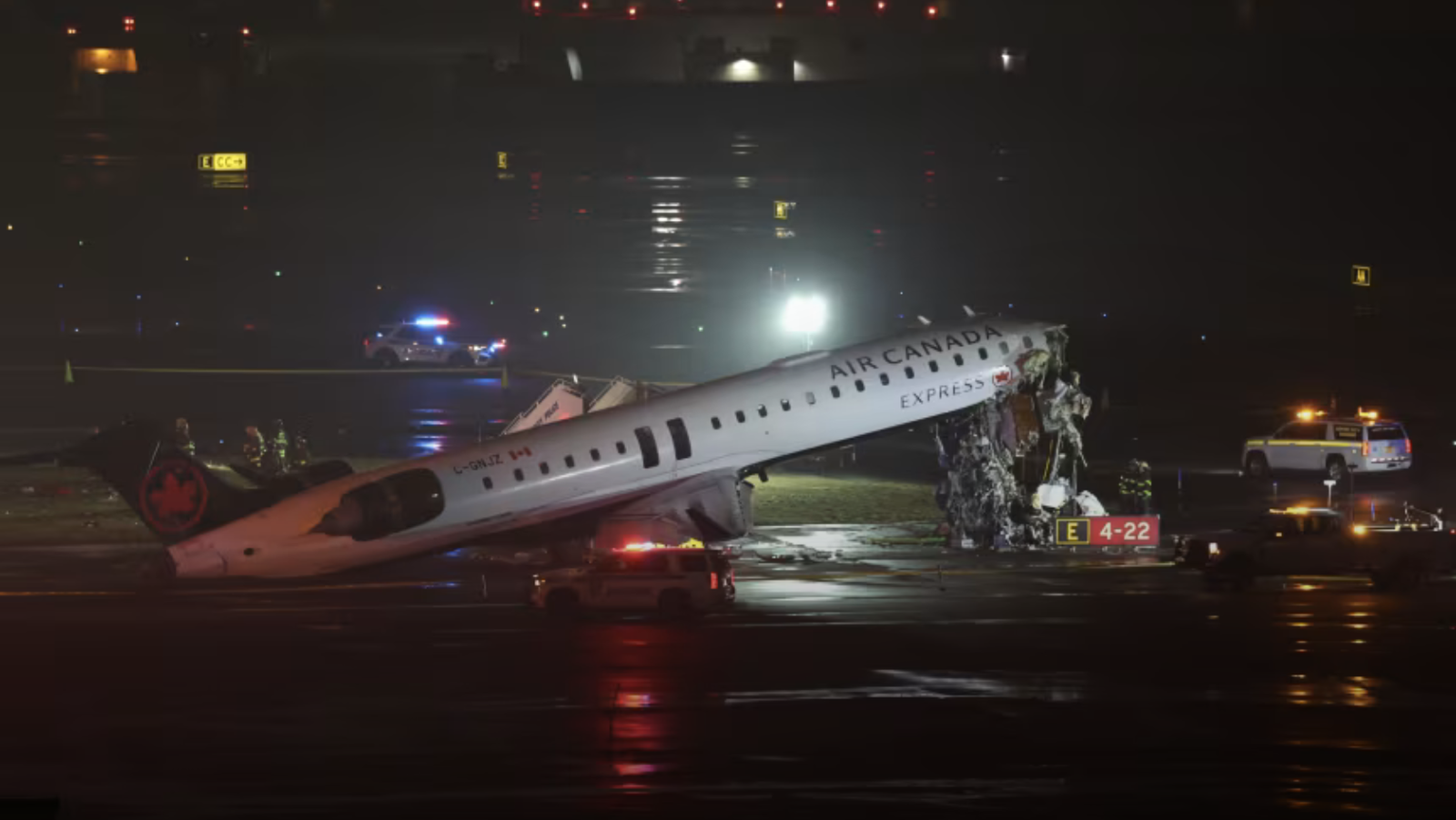
Air Canada flight hits fire truck at LaGuardia causing runway shutdown
An Air Canada aircraft collided with a fire truck on the runway at LaGuardia Airport late Sunday night, triggering a large-scale emergency response and forcing a temporary closure of the airport. The incident occurred just before midnight as the aircraft was completing its landing process.
Officials from the Port Authority of New York and New Jersey confirmed that the aircraft struck an emergency response vehicle that had been dispatched to address another situation on the airfield. Emergency teams were immediately deployed, and safety procedures were activated to secure the area and assist those involved.
Details of collision between aircraft and emergency vehicle
The flight, operated by Jazz Aviation on behalf of Air Canada, had departed from Montreal Trudeau International Airport earlier in the evening. After a routine flight, the aircraft approached LaGuardia and began its landing sequence before the collision occurred.
The emergency vehicle involved was part of the airport’s Aircraft Rescue and Firefighting unit. Reports indicate that the vehicle was crossing the runway to respond to a separate incident when the aircraft made contact with it.
Air traffic coordination appears to have played a role in the sequence of events. The vehicle had been granted permission to cross the runway, but a last-moment warning was issued to stop. Despite the instruction, the timing was insufficient to prevent the collision.
Damage to aircraft and emergency response actions
Visuals from the scene showed visible structural damage to the front portion of the aircraft, particularly around the cockpit and nose section. Emergency personnel quickly surrounded the aircraft, assessing the situation and ensuring that passengers and crew remained safe.
The New York City Fire Department responded rapidly after receiving alerts about the incident. Firefighters, along with airport emergency teams, worked together to manage the situation and secure the runway area.
Authorities have not confirmed details regarding injuries, but initial reports suggest that swift action by emergency crews helped control the situation effectively. Passengers were kept onboard for a short period as safety checks were completed.
Flight and aircraft details of the incident
The aircraft involved was a CRJ-900 regional jet, a model commonly used for short-haul flights and capable of carrying around 76 passengers. The flight departed Montreal shortly after 10:30 p.m. and reached New York in approximately one hour.
Flight tracking data indicates that the aircraft was traveling at a standard landing speed just before the incident. While such speeds are typical during runway operations, they also highlight the potential severity of collisions involving moving aircraft and ground vehicles.
The CRJ-900 is widely used by regional carriers and is considered reliable for short-distance routes. However, incidents like this demonstrate the importance of precise coordination between flight crews and ground operations.
Airport shutdown and flight disruptions
Following the collision, the Federal Aviation Administration issued a ground stop at LaGuardia Airport due to an aircraft emergency. All flights were temporarily halted to allow emergency teams to operate safely and investigators to examine the scene.
Airport authorities confirmed that operations would remain suspended for several hours. The closure caused significant disruption for travelers, with multiple flights delayed or canceled as a result.
Passengers were advised to contact airlines for updates and to expect ongoing delays as normal operations gradually resumed.
Weather conditions and contributing factors
Earlier in the evening, LaGuardia Airport had warned of potential disruptions due to weather conditions. Light rain and fog were reported in the area, which may have affected visibility on the runway.
Although the exact cause of the collision is still under investigation, weather conditions are often considered a contributing factor in such incidents. Reduced visibility can complicate communication and coordination between pilots and ground vehicles.
Investigators will analyze all relevant elements, including weather data, operational procedures, and communication records, to determine what led to the incident.
Air traffic coordination and sequence of events
Recordings of communication between the control tower and ground personnel reveal how events unfolded in the final seconds before impact. A runway crossing clearance was issued to the emergency vehicle, followed by an urgent instruction to halt movement when the aircraft was approaching.
Despite the warning, the aircraft and the vehicle were unable to avoid contact. The controller then informed the flight crew about the situation and directed emergency services to respond immediately.
This sequence highlights the importance of precise timing and coordination in airport operations, where even a brief delay can lead to serious consequences.
Investigation and safety review underway
The incident has prompted an investigation by aviation authorities, including the Federal Aviation Administration, while the National Transportation Safety Board has also been notified.
Officials will examine flight data, communication transcripts, and operational protocols to identify the root cause of the collision. The investigation aims to determine whether procedural or technical factors contributed to the event.
Findings from the investigation could lead to recommendations aimed at improving runway safety and preventing similar incidents in the future.
Impact on aviation safety and future precautions
The Air Canada flight hits fire truck at LaGuardia incident highlights the complexity of airport operations and the importance of strict safety measures. Coordination between aircraft and ground vehicles is essential to maintaining safe and efficient operations.
Airports operate under detailed safety systems, but incidents like this demonstrate the need for continuous monitoring and improvement. Lessons learned from the investigation may lead to enhanced communication protocols and stronger safety procedures.
As operations return to normal, aviation authorities will focus on ensuring that similar risks are minimized. The outcome of the investigation will play a key role in shaping future safety measures and maintaining confidence in air travel systems.