
Gabbard says Iran not rebuilding enrichment before war
Gabbard says Iran not rebuilding enrichment before war challenges US narrative
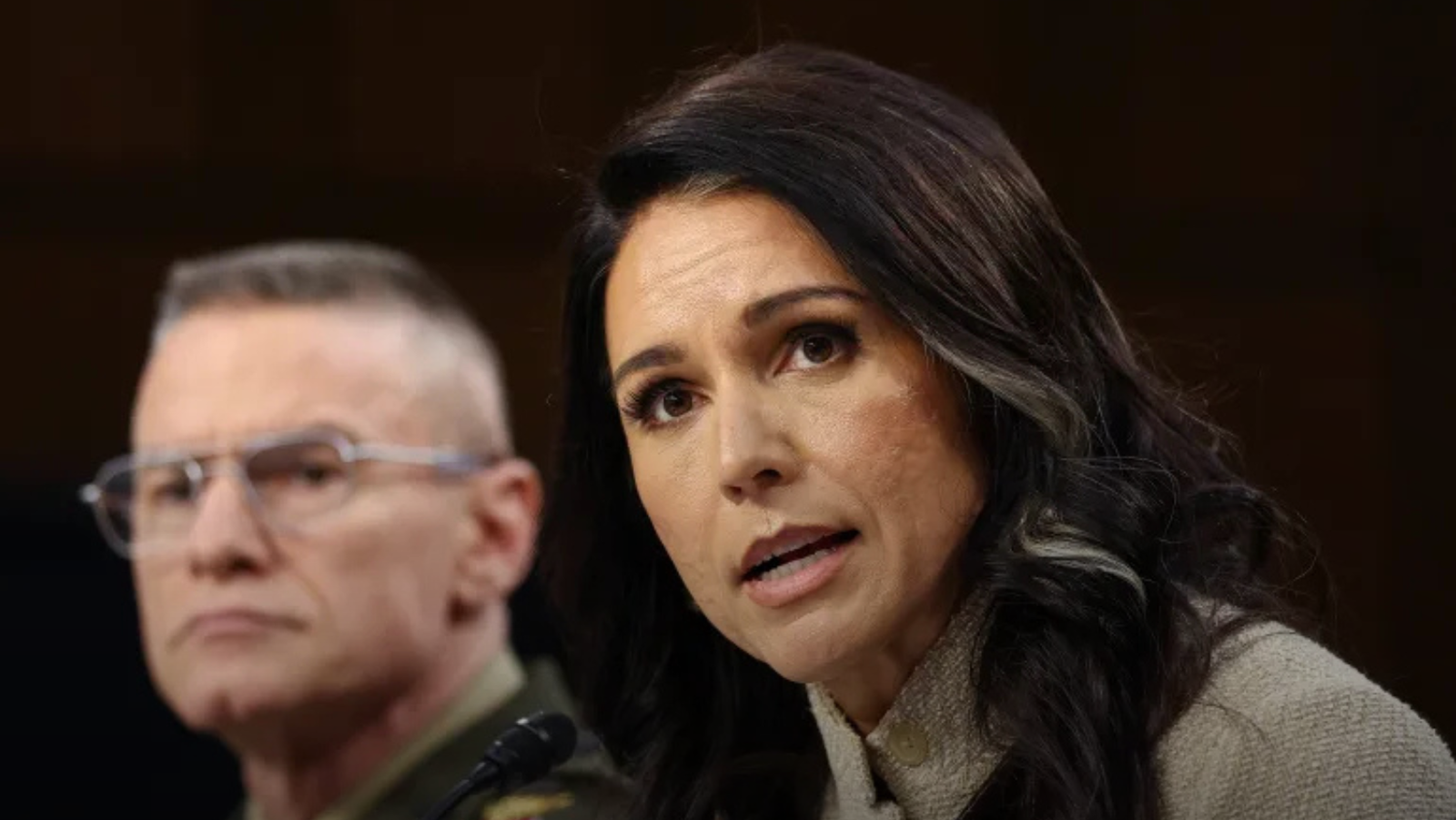
US Director of National Intelligence Tulsi Gabbard told lawmakers that Iran had not resumed its nuclear enrichment activities prior to the recent conflict, raising new questions about the justification for military action. Her remarks were delivered during a Senate Intelligence Committee hearing in Washington, where she presented the latest assessment from the US intelligence community.
According to Gabbard, intelligence findings showed that Iran’s nuclear enrichment program had been significantly damaged during earlier strikes and had not been rebuilt since. This assessment directly contrasts with claims made by Donald Trump, who had cited Iran’s nuclear ambitions as a key reason for escalating military involvement.
Intelligence findings on Iran nuclear program after strikes
Gabbard explained that the US intelligence community concluded Iran’s enrichment capability had been effectively dismantled following military operations conducted in 2025. These operations targeted nuclear facilities believed to be central to Iran’s uranium processing activities.
She stated that there had been no evidence indicating renewed efforts by Tehran to restore its enrichment capacity. This finding is significant because it challenges the perception of an immediate nuclear threat, which had been used to justify recent military decisions.
Experts in nuclear monitoring have long maintained that even if Iran had ambitions to develop nuclear weapons, the timeline for achieving such capabilities would be extended. Gabbard’s testimony reinforces this view by highlighting the absence of rebuilding efforts after the initial destruction.
Contradictions with US leadership statements
The statement from Gabbard introduces a clear contradiction within US policy messaging. President Trump had repeatedly emphasized that Iran posed an urgent nuclear threat, arguing that military action was necessary to prevent further escalation.
However, the intelligence assessment suggests that Iran’s nuclear capabilities were already neutralized and had not been reestablished. This raises questions about the consistency of the administration’s justification for entering the conflict.
During the hearing, lawmakers pointed out that parts of Gabbard’s written testimony, which included the assessment about Iran’s halted enrichment, were not initially presented in her verbal remarks. When questioned, she explained that time constraints prevented her from reading the full statement, though she did not dispute its accuracy.
Legal and strategic implications of the assessment
The issue of whether Iran posed an “imminent threat” is central to both international and domestic legal frameworks. Under international law, the use of force is generally justified only in cases of self-defense against an immediate threat. Similarly, US law limits the president’s authority to engage in military action without congressional approval unless there is a direct and urgent danger.
Gabbard’s assessment complicates this argument by indicating that Iran was not actively rebuilding its nuclear program at the time. This could influence ongoing debates about the legality and necessity of the military campaign.
Policy analysts suggest that differing interpretations of intelligence data can lead to significant shifts in decision-making. The gap between intelligence findings and political messaging often becomes a focal point in discussions about accountability and transparency.
Broader military capabilities of Iran after conflict
Despite the reported damage to its nuclear infrastructure, Iran retains a range of military capabilities that continue to concern US officials. Gabbard noted that while the country’s systems had been degraded, its government structure remains intact.
Iran is still capable of carrying out operations through its regional networks and proxy groups. It also maintains influence over key strategic locations, including maritime routes that are vital for global trade. These capabilities mean that even without an active nuclear program, Iran can still pose a significant challenge to regional stability.
In addition, Gabbard identified Iran among several countries working on advanced missile technologies. These developments, combined with existing military assets, contribute to ongoing security concerns for the United States and its allies.
Resignation highlights internal disagreement over war
The debate over the war has also led to internal divisions within the US administration. Joe Kent, a senior counterterrorism official, resigned in protest, stating that Iran did not represent an immediate threat to the United States.
His resignation marks one of the most notable instances of dissent within the administration regarding the conflict. Kent argued that the decision to engage militarily contradicted earlier commitments to avoid prolonged involvement in overseas wars.
Such disagreements highlight the complexity of assessing national security threats and determining appropriate responses. They also reflect broader concerns about the long-term consequences of military engagement in the region.
Diplomatic perspectives and international reactions
International observers have also weighed in on the situation, with some officials suggesting that diplomatic efforts had not been fully exhausted before the conflict began. Reports indicate that negotiations were still ongoing prior to the outbreak of hostilities, raising questions about whether alternative solutions could have been pursued.
Countries involved in mediation efforts have pointed out that dialogue remains a critical tool for resolving disputes and preventing escalation. The gap between intelligence assessments and policy decisions may influence future diplomatic strategies.
The situation underscores the importance of aligning intelligence findings with political actions to ensure credibility and maintain international trust.
Future outlook for US Iran relations and regional stability
The statement that Gabbard says Iran not rebuilding enrichment before war adds a new dimension to discussions about the conflict and its implications. It highlights the need for careful evaluation of intelligence data and transparent communication in shaping foreign policy decisions.
As tensions continue, the focus will likely shift toward managing the aftermath of the conflict and preventing further escalation. Both military and diplomatic approaches will play a role in determining the future of US-Iran relations.
The evolving situation also emphasizes the importance of long-term strategies that address security concerns while promoting stability in the Middle East. How policymakers respond to these challenges will shape the region’s trajectory in the coming years.

Lovely site! I am loving it!! Will be back later to read some more. I am bookmarking your feeds also