
US Embassy Attack in Baghdad Kills Four Amid Drone Strikes
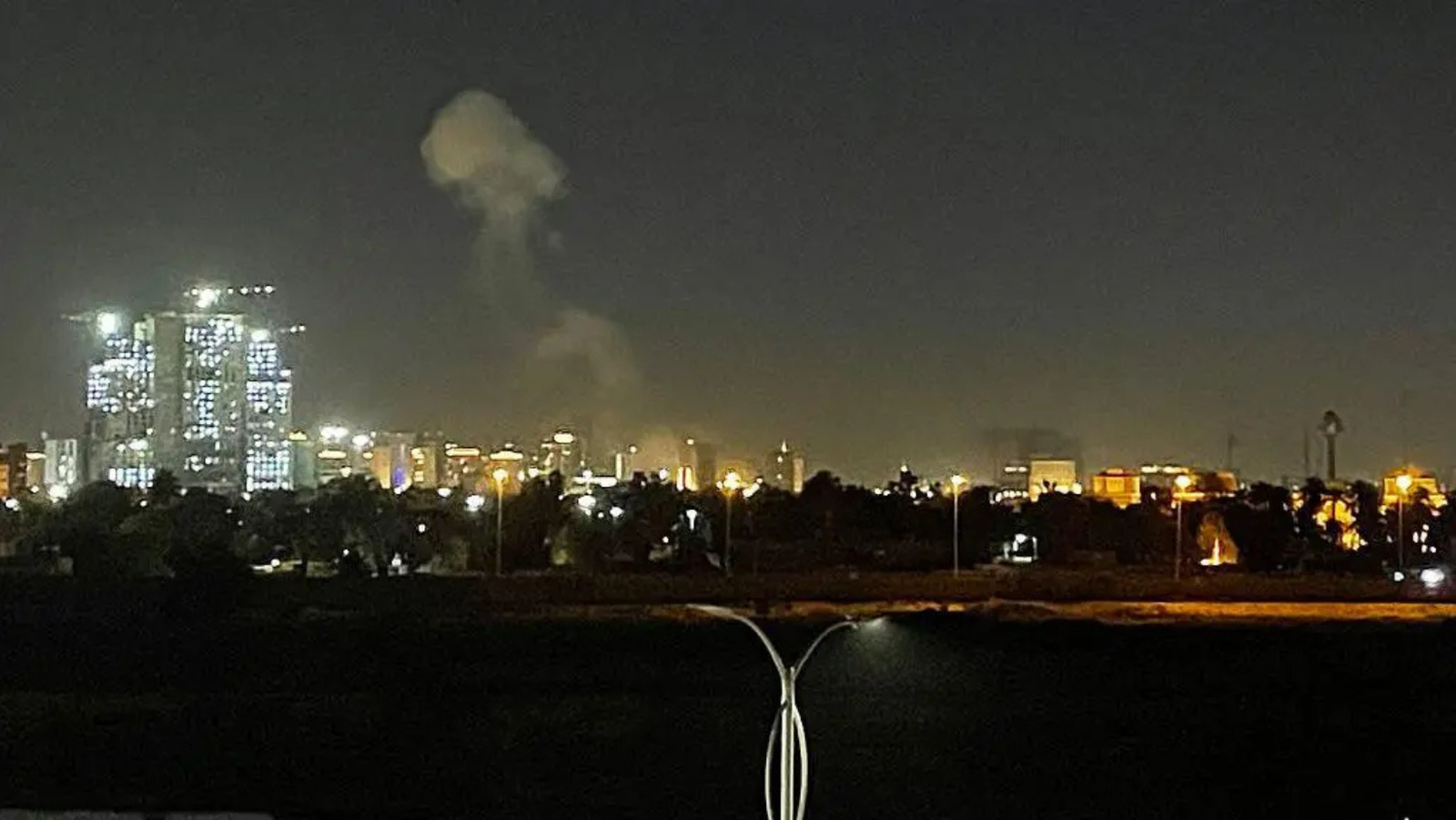
US Embassy area in Baghdad targeted as Iran-backed forces clash with US troops amid drone strikes and rising regional tensions
Multiple explosions rocked Baghdad on Tuesday as the US Embassy and surrounding areas became the focus of escalating violence between American forces and Iran-backed groups. The deadly clashes, which included drone strikes and an air raid on a house used by the Popular Mobilisation Forces (PMF), resulted in at least four fatalities, according to Iraqi security sources and eyewitness accounts.
The incident took place in the Jadriyah district near the US Embassy, within Baghdad’s heavily fortified Green Zone. Residents reported hearing a series of loud blasts, followed by smoke rising above the area. Video footage from the scene showed air defense systems intercepting multiple drones, though some strikes reportedly landed inside the embassy compound.
US Embassy under threat: Drone strike details
Security sources confirmed that Baghdad’s C-RAM air defense system successfully shot down at least two drones targeting the US Embassy. A third drone reportedly penetrated the compound but caused only limited damage. Authorities did not immediately release a detailed statement on the embassy’s security status, citing ongoing investigations and operational confidentiality.
The Jadriyah air raid targeted a residence reportedly used as a headquarters by the Iran-backed PMF, known in Arabic as Hashd al-Shaabi. The PMF, formed in 2014 to counter ISIS advances, includes several groups aligned with Tehran and is formally integrated into Iraq’s state security forces. According to reports, the building hosted Iranian advisers, further heightening tensions in the Green Zone.
Escalating cycle of attacks
The recent violence marks another chapter in the ongoing confrontations between US forces and Iran-aligned groups amid the broader US-Israel conflict with Iran. In addition to the air raid, a drone strike hit the Al Rasheed Hotel near the US Embassy, causing a minor fire but no casualties. This hotel houses several foreign diplomatic missions, including EU offices, Saudi personnel, and staff from international energy firms.
Eyewitnesses said security forces quickly responded, blocking roads leading to the Green Zone with armored vehicles and barricades. Residents in the vicinity reported heightened anxiety as drone alarms and explosions continued sporadically throughout the day.
Iran-backed groups and US retaliation
The Jadriyah strike is believed to be retaliatory, following a US operation targeting a PMF checkpoint in Al-Qaim, western Anbar province, near the Syrian border. At least eight Iraqi troops were reportedly killed in that operation. Iran-aligned armed factions have increasingly targeted US military installations and diplomatic compounds in Iraq, including the US Embassy and consulates, since the US and Israel’s campaign against Iran escalated.
Kataib Hezbollah, one of the PMF’s largest factions, confirmed the death of a senior commander, Abu Ali Al-Askari, though details of the circumstances were not provided. The continued attacks have also affected Iraq’s oil infrastructure, with drone strikes reported at the Majnoon oilfield in Basra province. While no casualties were reported, officials remain concerned about potential damage to critical energy assets.
Iraq’s response and security measures
The Iraqi army condemned the Al-Qaim checkpoint attack as a “treacherous and cowardly act” and emphasized that any assault on security forces would not be tolerated. Government officials reaffirmed their commitment to protecting civilians and maintaining the integrity of Iraq’s security forces, including members of the PMF.
Authorities have heightened security across Baghdad, particularly around the Green Zone and the US Embassy perimeter. Checkpoints have been reinforced, and road closures implemented to prevent further incursions. Baghdad residents have been advised to remain vigilant, while diplomatic staff continue to operate under strict security protocols.
Regional implications and global attention
The recent incidents near the US Embassy have underscored the fragile stability in Iraq as regional tensions rise. Experts warn that repeated attacks targeting diplomatic and military installations could escalate into broader conflict, affecting not only Iraq but neighboring Gulf nations and global energy markets.
The attacks also coincide with disruptions in the Strait of Hormuz, where US allies have largely refused calls to escort oil tankers, contributing to volatility in global crude prices. Analysts suggest that drone strikes and escalating hostilities near Baghdad could further destabilize energy flows in the region.
Impact on civilians and humanitarian concerns
While the attacks have primarily targeted military and paramilitary installations, the proximity of residential areas and diplomatic zones has caused significant civilian anxiety. Families in Baghdad report fear of drone strikes and explosions, particularly near the US Embassy and other high-security compounds.
International humanitarian organizations continue to monitor the situation, noting the increased risk for both civilians and foreign personnel. Human rights groups emphasize the importance of transparent reporting on casualties and damages, warning that lack of information could exacerbate the humanitarian crisis in Iraq.
Conclusion: Rising threat near US Embassy
The escalation around the US Embassy in Baghdad highlights the complex dynamics of the ongoing US-Israel-Iran conflict and the involvement of Iran-backed militias in Iraq. As drone attacks and air raids continue, Baghdad remains a focal point of regional instability. Security experts stress that without diplomatic intervention and effective conflict management, the risk of further casualties and strategic disruption in the region will persist.
With at least four confirmed fatalities and ongoing threats to both civilian and diplomatic areas, the US Embassy and surrounding Green Zone remain at the center of international attention. Authorities continue to strengthen defensive measures, while regional and global observers watch closely as the situation unfolds.
There are definitely a variety of particulars like that to take into consideration. That is a nice point to carry up. I supply the ideas above as basic inspiration however clearly there are questions like the one you bring up where a very powerful thing can be working in trustworthy good faith. I don?t know if best practices have emerged round things like that, however I am sure that your job is clearly recognized as a fair game. Each girls and boys really feel the influence of only a second’s pleasure, for the rest of their lives.