

Kuwait destroys drone warhead remnants from fuel tank
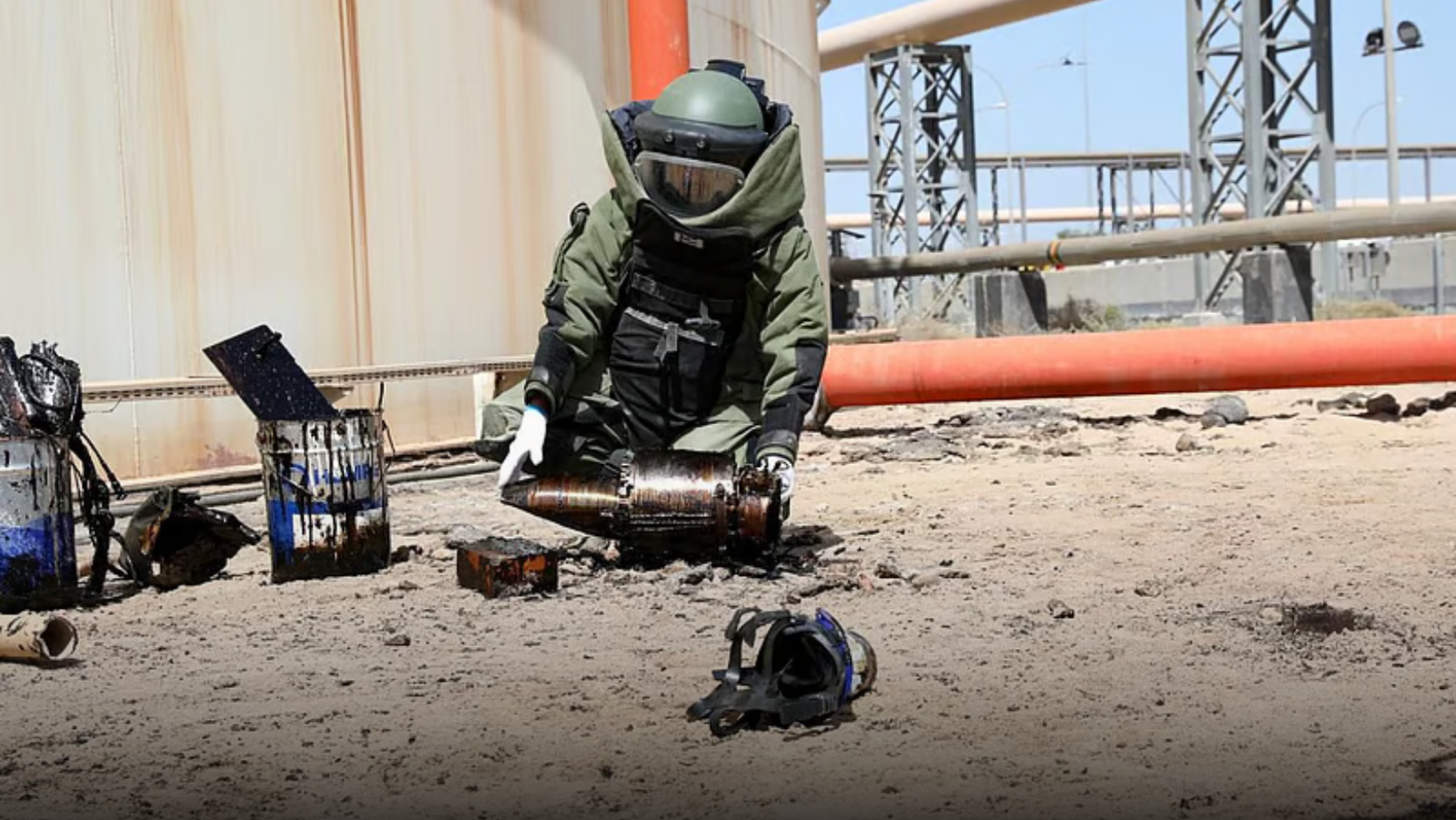
Kuwait destroys drone warhead remnants from fuel tank safely
Kuwait’s National Guard has successfully completed a complex operation to remove and destroy the remnants of a drone warhead that had fallen into a fuel tank without detonating. The delicate mission required several days of careful technical work due to the dangerous conditions created by the presence of petroleum materials and chemical vapors inside the tank.
Officials confirmed that the operation was carried out by the Explosive Ordnance Disposal Unit within the Engineering Battalion. The team responded immediately after authorities received a report about the suspicious object located within the fuel storage facility.
Initial technical assessments revealed that the drone’s warhead had entered the fuel tank but had not exploded on impact. While the absence of detonation prevented immediate damage, the situation still posed a serious risk. Experts warned that any sudden movement or incorrect handling could have triggered a dangerous explosion due to the highly flammable environment.
Because of these risks, the engineering team carefully planned each stage of the operation before attempting to remove the explosive material. Safety measures were put in place to protect personnel working at the site as well as nearby facilities.
According to officials, the first step involved a detailed technical inspection to determine the condition and exact location of the warhead fragments inside the tank. Specialists used approved technical procedures to assess the threat while maintaining strict safety protocols.
The team then began a complex process that involved draining the entire fuel tank to eliminate the immediate risk of ignition. This procedure required significant time and coordination to ensure that all hazardous materials were handled safely.
Once the tank was emptied, engineers were able to proceed with the next phase of the mission. Using specialized equipment and protective procedures, the Explosive Ordnance Disposal team carefully extracted the drone warhead components from inside the tank.
The remnants were then transported to a secure location where they were destroyed using approved technical methods designed to safely neutralize explosive materials.
Officials described the mission as a challenging task that required precision, patience, and strong coordination between technical teams.
Seven-day operation highlights expertise of EOD team
The entire operation lasted for seven continuous days, during which engineers and technical specialists worked around the clock to ensure the safe removal of the explosive device.
Military officials explained that the complexity of the mission required strict adherence to safety procedures. Because the warhead had landed inside a tank containing petroleum substances and chemical vapors, the environment presented unusual technical challenges.
Experts noted that such situations require extremely careful handling. Even a small error could potentially trigger an explosion, placing both the operation team and nearby infrastructure at risk.
Members of the Explosive Ordnance Disposal Unit later shared insights about the mission, emphasizing the importance of discipline and teamwork throughout the operation.
One officer involved in the mission explained that the task required precise calculations and careful movement at every stage. The team followed established safety guidelines and technical standards to minimize risk.
Another officer highlighted the importance of preparedness when dealing with unconventional threats such as drone-related incidents. Modern security challenges increasingly involve new types of aerial devices, which means technical teams must remain ready to handle unexpected situations.
Officials also noted that the experience and training of the engineering unit played a key role in the success of the mission. The ability to manage complex explosive threats in hazardous environments reflects the high level of readiness within the National Guard.
Following the successful removal and destruction of the drone warhead remnants, authorities confirmed that the site had been secured and that no further danger remained.
Security officials praised the professionalism of the engineering team and emphasized that the operation demonstrated the strength of Kuwait’s defense preparedness and technical capability.
Authorities also used the opportunity to remind the public about the importance of reporting suspicious objects or unusual debris to security agencies. Quick reporting allows trained specialists to assess and neutralize potential threats before they cause harm.
Officials stressed that public cooperation plays an important role in maintaining safety, particularly during periods of heightened regional tension.
The National Guard further stated that the successful completion of the mission reflects strong coordination between military and security institutions responsible for protecting the country.
By responding quickly and carrying out the operation with precision, the engineering team prevented what could have been a serious incident involving flammable materials and explosive devices.
The operation also highlighted the growing role of specialized explosive disposal units in modern security operations. As drone technology becomes more common in conflict situations, defense forces must adapt their strategies and technical capabilities to address emerging threats.
For Kuwait, the successful resolution of this incident demonstrates the effectiveness of its trained personnel and the readiness of its security institutions to manage complex risks.
Officials reaffirmed that protecting lives, infrastructure, and national resources remains a top priority, and that security forces will continue to remain vigilant in responding to any threats that may arise.