

Mawani, Qatar Ports Sign Cooperation Deal to Strengthen Regional Maritime Trade
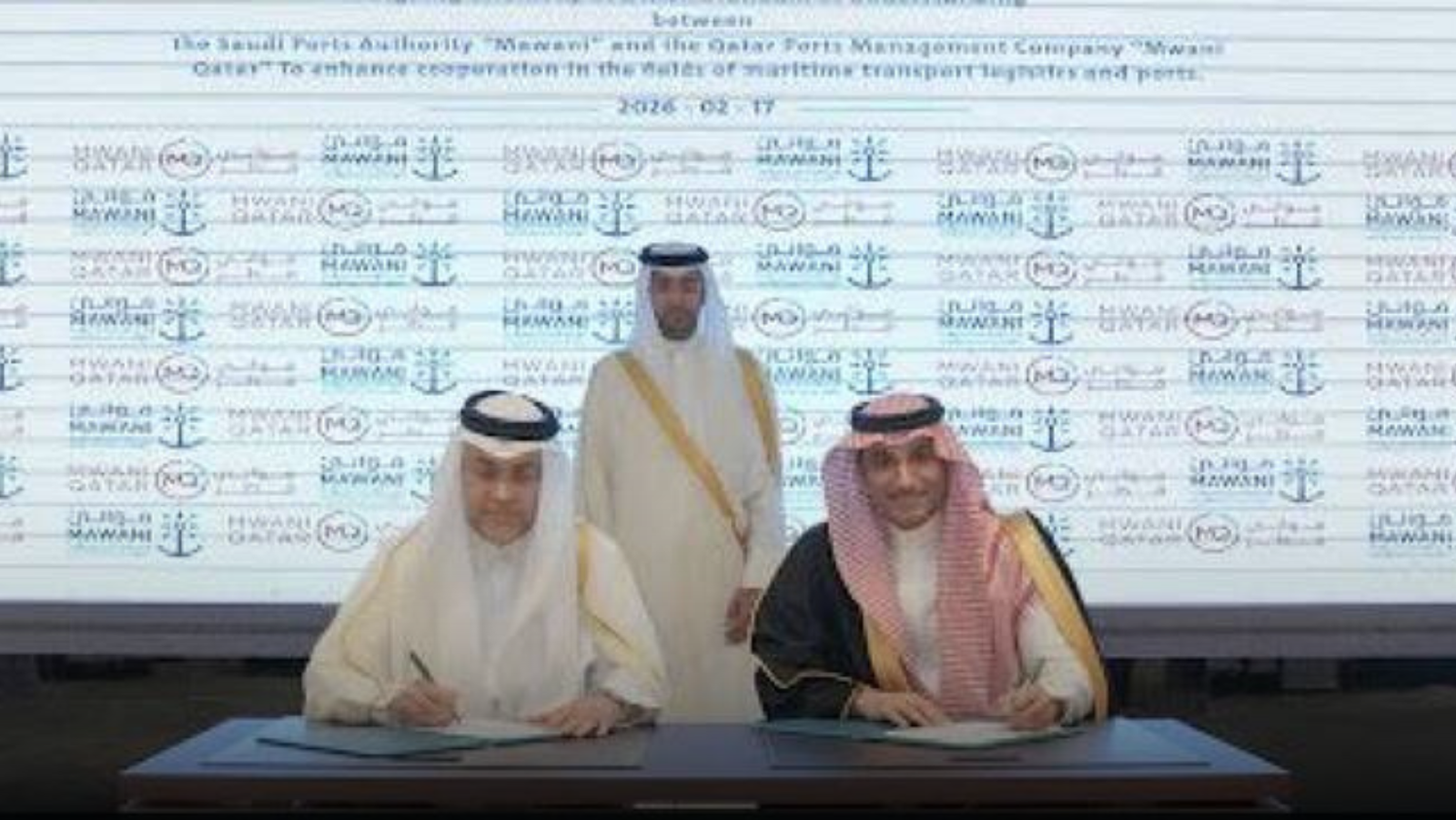
The Saudi Ports Authority (Mawani) and Qatar Ports Management Company have signed a memorandum of understanding aimed at enhancing maritime and logistics cooperation and strengthening regional and international trade flows.
The agreement was signed in Riyadh by Mawani President Suliman Al-Mazroua and Qatar Ports Management Company Chief Executive Officer Abdullah Mohammed Al-Khanji, in the presence of Bandar bin Mohammed Al-Attiyah.
The memorandum outlines a structured framework for collaboration across multiple areas of the ports and logistics sector, reflecting both countries’ efforts to build strategic partnerships aligned with long-term development plans, including Saudi Vision 2030 and Qatar National Vision 2030.
Under the agreement, both sides will exchange expertise in port management and operations and explore opportunities to enhance direct maritime and land connectivity between ports in the two countries. The move is expected to improve trade efficiency and facilitate smoother cargo movement across the Gulf region.
The cooperation framework includes the development of joint maritime corridors to serve bilateral and regional trade, as well as studying the feasibility of establishing shared regional distribution centers. Both authorities will also collaborate on advancing logistics services and integrating digital technologies into port operations.
A significant component of the agreement focuses on digital transformation and artificial intelligence, including the implementation of smart systems, improved data governance and the development of a unified maritime window aimed at streamlining procedures and boosting operational performance.
Maritime safety and environmental sustainability are also central to the partnership. The memorandum calls for collaboration on marine pollution response, joint emergency planning and the creation of a bilateral emergency communication mechanism. The two sides will also coordinate on compliance with international maritime conventions and conduct joint exercises to enhance risk monitoring and preparedness.
Human capital development forms another pillar of the agreement, with plans for joint training programs, knowledge exchange initiatives and academic cooperation in maritime transport and logistics.
In addition, both parties will explore joint investment opportunities in port infrastructure and related services, working in coordination with private sector stakeholders to support growth in the maritime industry. The memorandum also highlights cooperation in cruise tourism, including promoting Gulf cruise routes and strengthening maritime connectivity.
The agreement underscores the commitment of both port authorities to expanding the role of the maritime sector as a driver of economic diversification, regional integration and competitiveness in global shipping and logistics services.