
Trump Sends Second Aircraft Carrier to Middle East to Increase Pressure on Iran
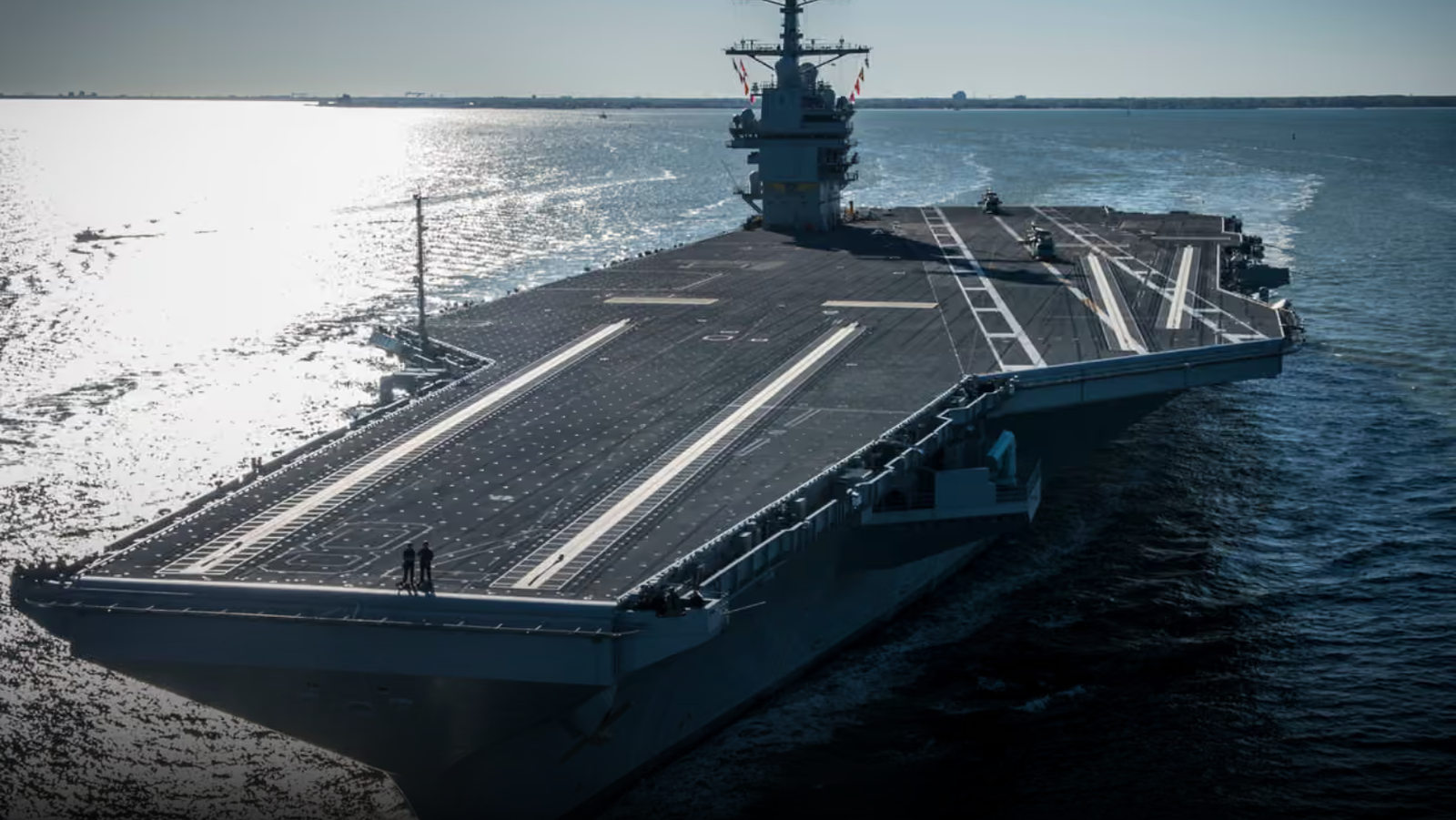
Trump’s decision to send a second aircraft carrier to the Middle East marks a significant escalation in U.S. military positioning as Washington intensifies pressure on Iran over its nuclear and ballistic missile activities.
The USS Gerald R. Ford, the largest aircraft carrier in the world, has been ordered to depart from the Caribbean Sea and head toward the region. The deployment is expected to take approximately three weeks, after which the carrier strike group will join the USS Abraham Lincoln, already operating in Middle Eastern waters.
The move substantially increases American naval firepower in a region where tensions with Tehran remain high. Officials say the expanded military presence is intended to strengthen Washington’s leverage as diplomatic discussions continue over Iran’s nuclear program.
Earlier this week, Trump indicated he was considering deploying another carrier strike group, suggesting that although negotiations were ongoing, the United States must maintain a position of strength. Talks between U.S. and Iranian representatives were held indirectly in Oman last week, with further discussions anticipated, though no formal schedule has been confirmed.
The decision follows Trump’s recent meeting in Washington with Israeli Prime Minister Benjamin Netanyahu, where the two leaders reportedly discussed Iran’s nuclear ambitions and regional influence. Israel has consistently pressed for stricter limits on Iran’s missile capabilities and its support for allied armed groups across the Middle East.
Tehran has signaled willingness to restrict aspects of its nuclear enrichment activities in exchange for sanctions relief, but it has rejected demands related to its ballistic missile program and regional alliances.
Trump’s posture toward Iran has shifted in recent months. Earlier statements hinted at potential intervention during domestic unrest inside Iran, though at that time U.S. military assets in the region were limited. The arrival of the Abraham Lincoln carrier group altered the strategic balance, reinforcing the American presence.
The Ford carrier strike group had previously been operating in the eastern Mediterranean before relocating to the Caribbean late last year amid separate geopolitical tensions. Its return to the Middle East represents an extended deployment cycle, as the vessel initially left the United States in mid-2025 and has yet to receive a confirmed return timeline.
On Thursday, Trump warned that failure to reach an agreement on Iran’s nuclear program could have serious consequences. He expressed hope that negotiations would progress rapidly, suggesting a resolution could emerge within weeks if both sides act decisively.
With two carrier strike groups positioned in proximity to Iran, the United States is signaling both military readiness and diplomatic urgency. Analysts say the dual-track approach — combining negotiations with enhanced deterrence — underscores the high stakes surrounding the future of Iran’s nuclear ambitions and regional stability.