Germany Rules-Based Order Warning: Merz Says Global System Has Effectively Collapsed
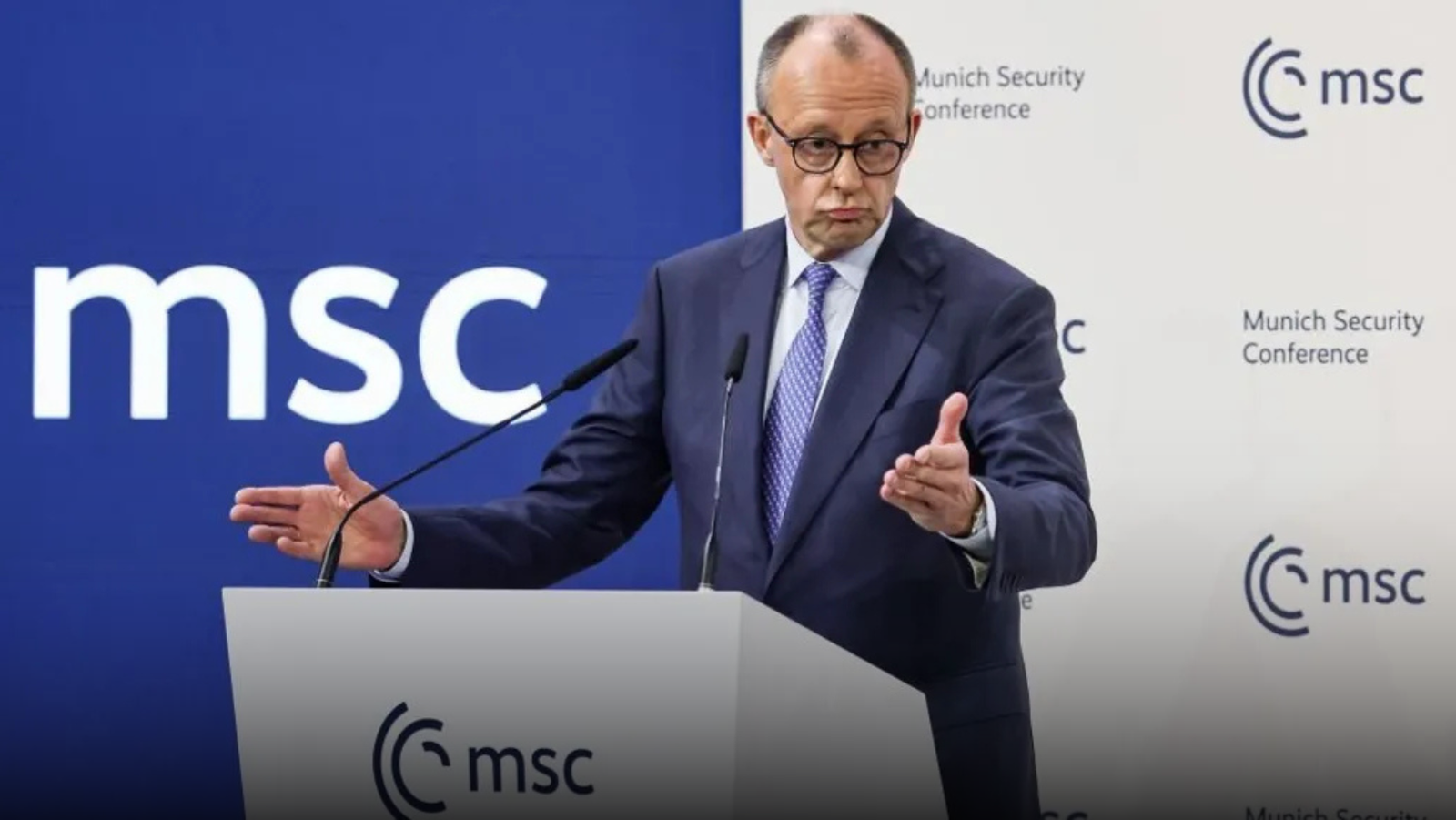
Germany’s rules-based order warning took center stage at the Munich Security Conference as Chancellor Friedrich Merz declared that the international system that has shaped global stability for decades is no longer functioning in its previous form.
Speaking before dozens of world leaders and senior policymakers, Merz said the global framework built on shared principles and cooperation has weakened amid rising geopolitical rivalry. He cautioned that Europe must recognize a new era defined by strategic competition between major powers.
“Our freedom is not guaranteed,” the German leader said, urging European nations to prepare for difficult political and economic sacrifices to preserve security and democratic values.
Merz also acknowledged growing tensions across the Atlantic, stating that a significant divide has emerged between Europe and the United States. His remarks come at a time of mounting uncertainty over Washington’s long-term strategic commitments to its European allies.
The conference is unfolding against the backdrop of renewed controversy surrounding U.S. foreign policy. Former President Donald Trump has recently reiterated his intention to bring Greenland under U.S. control, describing the Arctic territory as strategically vital. The comments have unsettled European governments, particularly Denmark, which maintains sovereignty over Greenland.
At the same time, U.S. trade measures targeting European imports have further strained relations. European officials view these developments as part of a broader shift in transatlantic dynamics.
U.S. Secretary of State Marco Rubio, who is expected to address the conference, described the current period as a transformative moment in global politics. He said governments must reassess their roles in what he called a rapidly evolving geopolitical landscape.
Security discussions at the gathering also include the ongoing war in Ukraine, tensions between Western powers and China, and diplomatic efforts surrounding Iran’s nuclear program.
Merz reflected on previous warnings that the global order was weakening, arguing that recent developments confirm those concerns. While acknowledging that the rules-based system was never perfect, he said it no longer exists in the same structured and predictable way.
He also referenced earlier remarks by U.S. Vice-President JD Vance, who last year sharply criticized European policies, contributing to a year of diplomatic friction.
Despite his stark assessment, Merz emphasized that the transatlantic alliance remains essential. He called for renewed efforts to rebuild trust between Europe and the United States, rather than abandoning decades of partnership.
In a notable development, the German chancellor revealed that confidential discussions are underway with French President Emmanuel Macron regarding enhanced European nuclear deterrence cooperation. While no formal proposal has been announced, the talks signal a broader debate about Europe’s strategic autonomy.
France and the United Kingdom are currently the only nuclear-armed states within Europe. Germany and several other nations have traditionally relied on the United States’ nuclear umbrella through NATO for security guarantees.
As global uncertainty intensifies, this year’s Munich Security Conference reflects a growing recognition among European leaders that the geopolitical order is undergoing profound change.