German Chancellor Friedrich Merz Visits China to Address Trade Imbalance and Ukraine Conflict
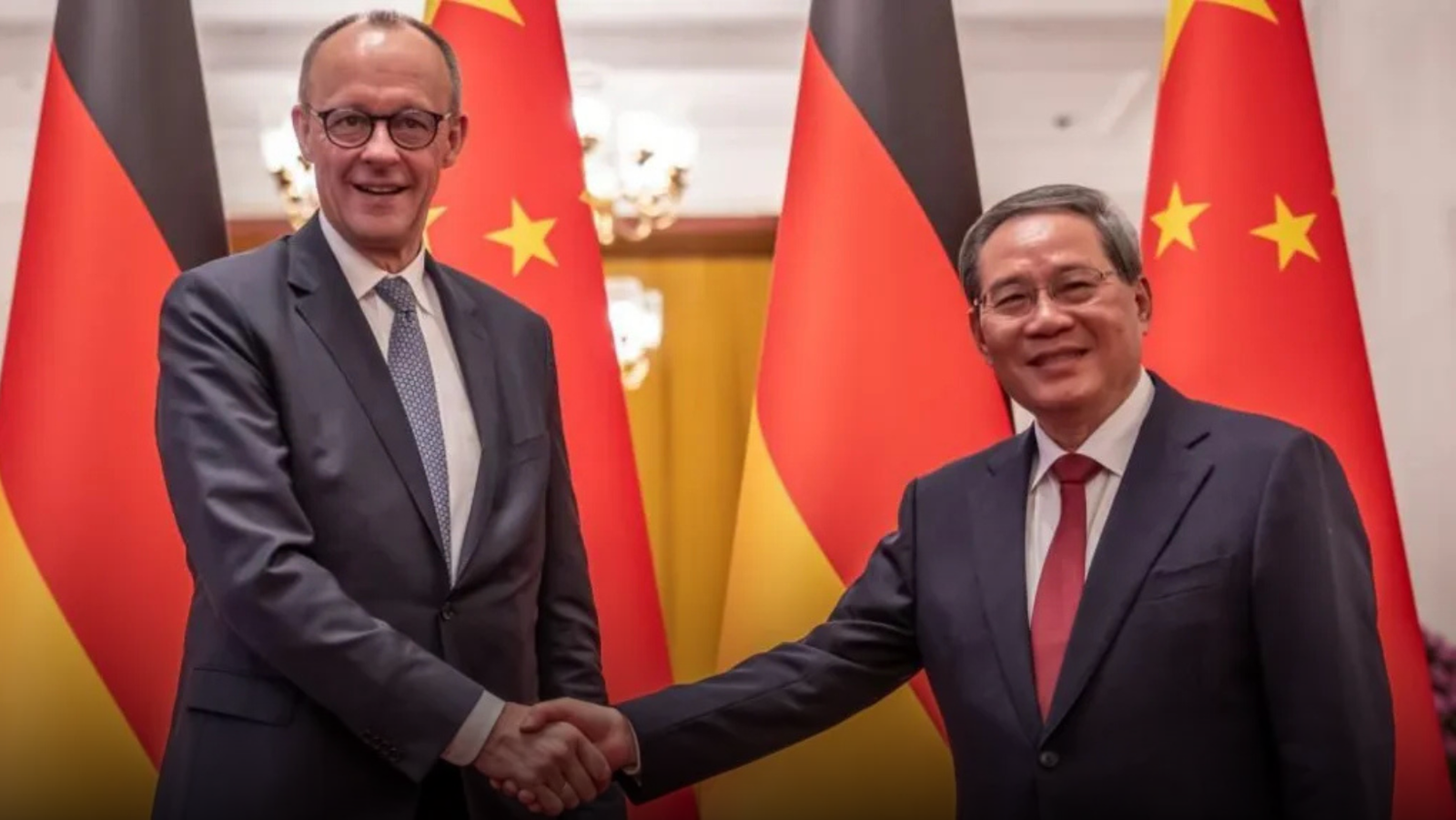
German Chancellor Friedrich Merz arrived in Beijing on Tuesday for his inaugural trip to China, bringing a sizable business delegation amid growing concerns over a widening trade imbalance. German imports from China in 2025 were more than double the value of goods exported, highlighting a challenge for Europe’s largest economy.
“We want a partnership with China that is balanced, reliable, regulated and fair,” Merz said prior to his departure, emphasizing the need for equitable trade while signaling intentions to press Beijing on its influence with Moscow to help end the war in Ukraine.
China reclaimed its position as Germany’s largest trade partner last year, surpassing the United States. Imports from China totaled €170.6 billion, an 8.8% increase from 2024, while German exports to China fell 9.7% to €81.3 billion. Analysts warn that the growing trade gap is affecting key sectors, including automotive, machinery, and chemicals.
Jürgen Matthes, head of International Economic Policy at the German Economic Institute, cited Chinese subsidies and a managed currency as the primary drivers of the imbalance. “Chinese price advantages cannot just come from more innovation and efficiency,” Matthes told the BBC. Beijing, however, maintains that its subsidy policies are transparent and consistent with international trade rules, and that its currency operates under a market-driven, yet managed, exchange rate system.
The trade deficit is being labeled the latest “China shock” in Europe, influenced in part by the pandemic and Russia’s invasion of Ukraine, which increased production costs in the EU, while overcapacity in Chinese manufacturing fueled cheaper exports. Experts warn that these structural pressures are straining Germany’s industrial base, particularly as the country transitions to electric vehicles, a sector where China is dominant.
Business groups in Germany are urging Merz to address distortions in competition and export controls on critical rare earths during his visit. The Federation of German Industries and German Engineering Federation emphasize the need for fair competitive conditions and potential protective measures if necessary.
Merz’s free-trade, trans-Atlantic approach is navigating a shifting global reality. Europe seeks to balance engagement with China while reducing dependencies, launching anti-dumping cases and exploring domestic production initiatives to mitigate risks.
Ahead of his flight, Merz reiterated Germany’s broader de-risking policy but stressed that decoupling from China would be a strategic mistake. “It would be a mistake for us to seek to decouple ourselves from China,” he said, reflecting Berlin’s cautious approach to maintaining economic ties while addressing strategic and geopolitical challenges.