EU Summit on Iran War and Ukraine Loan Highlights Rising Tensions
European Union Leaders Meet Amid Iran War and Energy Concerns
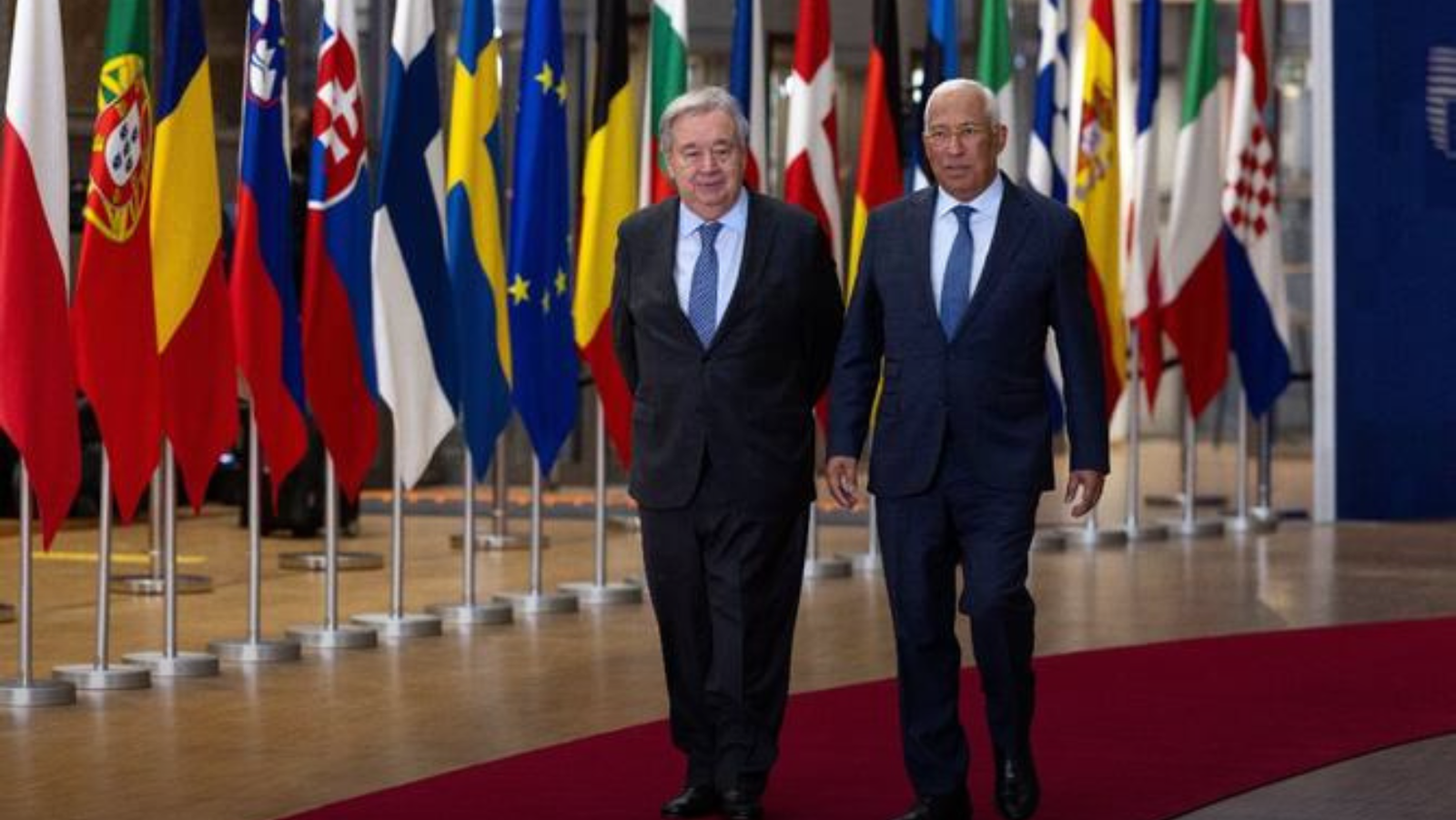
European Union leaders gathered in Brussels on Thursday to discuss urgent regional and global issues, including the ongoing Iran war, escalating energy prices, migration, and the stalled financial support for Ukraine. The summit comes at a time when rising geopolitical tensions and economic pressures are forcing EU policymakers to address multiple crises simultaneously.
Rising energy costs due to the Iran conflict, combined with fears of a new refugee crisis, have made the Middle East a top priority at the summit. Leaders emphasized that a coordinated European response is essential to mitigate both the humanitarian and economic fallout from the war.
Hungary Blocks Crucial Loan for Ukraine
One of the most contentious issues at the summit is Hungary’s refusal to approve a 90-billion-euro ($104 billion) loan for Ukraine, initially agreed upon during the EU summit in December. The loan is intended to help Ukraine address budget shortfalls caused by the ongoing war with Russia, which began on February 24, 2022.
Hungarian Prime Minister Viktor Orbán, who has held office since 2010, backtracked on the loan approval after the Druzhba oil pipeline was disabled in January, allegedly following a Russian drone attack. Orbán, often criticized for his pro-Russia stance, has launched an aggressive media campaign blaming Brussels and Kyiv as he campaigns for reelection next month.
“If there is no oil, there is no money,” Orbán wrote on social media, signaling that Hungary’s energy security concerns are directly affecting its stance on the Ukraine loan.
EU Leaders Push for Diplomatic and Financial Solutions
EU leaders, along with diplomats, are actively lobbying Hungary and Slovakia to approve the loan. Slovakia’s Prime Minister Robert Fico, whose government has also taken a pro-Russia position, is part of the negotiation efforts.
European Commission President Ursula von der Leyen offered solutions to repair the Druzhba pipeline and develop alternative fuel supply lines for Hungary and Slovakia. These measures are intended to remove the energy security barrier preventing approval of the Ukrainian loan.
Ukrainian Response Highlights Urgency
Ukrainian President Volodymyr Zelensky has criticized any obstruction to the loan, calling it “absolutely unfair.” He stressed that Ukraine has no alternative but to secure these funds to sustain its military and economic efforts.
“There may be alternatives in terms of financing mechanisms, but there is simply no alternative to strengthening our army,” Zelensky said, underlining the strategic importance of the EU financial support.
The stalled loan has heightened the urgency for the EU to maintain solidarity with Ukraine as the conflict with Russia continues to strain the country’s resources and infrastructure.
Rising Energy Prices Dominate the Summit Agenda
The EU summit also focused on soaring energy prices resulting from the war in the Middle East. European Commission officials suggested a “toolbox” of measures to help stabilize energy costs across the 27-nation bloc, recognizing that no single policy could adequately address the economic shocks from rising oil and gas prices.
Energy security remains a critical issue for EU member states, particularly in light of recent disruptions to pipelines and the potential for continued conflict in the Gulf. Leaders highlighted that coordinated action is necessary to protect both households and industries from further economic instability.
Migration Concerns Add Pressure on EU Policymakers
In addition to energy and financial issues, the EU summit addressed the possibility of a new refugee crisis caused by regional instability. Rising conflict in the Middle East, combined with ongoing economic disruptions, has prompted concerns about a surge in migration toward Europe.
Leaders agreed that proactive measures and enhanced cooperation among member states are required to manage potential refugee flows while ensuring that humanitarian obligations are met.
Germany and Other Key Players Advocate Swift Action
German Chancellor Friedrich Merz called for swift resolution on both the Ukraine loan and the 20th package of sanctions against Russia. Speaking in Berlin, Merz emphasized that domestic political considerations in individual EU countries should not obstruct collective European priorities.
“We must not take into consideration a single country in the European Union that is currently setting up this blockade in Europe now for domestic political reasons and because of an election campaign that is being conducted there,” Merz said.
He also advocated for increased pressure on Moscow, in coordination with the United States and other European partners, to reinforce sanctions and maintain geopolitical leverage.
EU Summit Signals Commitment to Stability and Cooperation
Despite disagreements among member states, the EU summit highlights a continued commitment to regional stability, economic resilience, and humanitarian responsibility. By addressing the Iran war, energy security, migration, and the stalled Ukraine loan together, European leaders demonstrate a willingness to coordinate solutions across multiple policy areas.
The summit reflects the EU’s broader strategic priorities, including maintaining energy security, supporting allied nations, and ensuring that regional conflicts do not destabilize European markets or political cohesion.
Potential Outcomes for Ukraine and Regional Security
The resolution of Hungary’s blockade on the Ukraine loan will be a key indicator of EU unity. Successful negotiation could secure essential funding for Ukraine, enabling the country to continue its defense efforts against Russian aggression while stabilizing its economy.
Meanwhile, discussions on energy prices and migration policies are expected to guide EU responses to the ongoing Iran conflict, aiming to mitigate the impact of regional instability on European citizens and markets.
Focus on Diplomacy and Multilateral Solutions
EU leaders continue to emphasize diplomacy as the primary tool for addressing both the Iran conflict and the Ukraine financial crisis. Coordinated measures, including alternative fuel pipelines, financial support, and sanctions enforcement, illustrate the bloc’s preference for multilateral solutions rather than unilateral actions.
The summit also demonstrates the EU’s proactive approach in balancing domestic political challenges with international obligations, ensuring that member states work together in the face of complex geopolitical and economic pressures.
Future Stability Depends on European Unity and Strategic Planning
Experts note that the success of the EU summit will largely hinge on unity among member states and the ability to implement coordinated policies. Resolving disputes like Hungary’s loan blockade and addressing energy security challenges are critical for sustaining Europe’s strategic influence and supporting allies like Ukraine.
The coming weeks will be crucial for EU leaders, as decisions made in Brussels are expected to have lasting effects on regional security, the financial stability of Ukraine, and the broader international response to the Iran war.