
China Adjusts Fuel Prices Amid Iran War Energy Crisis
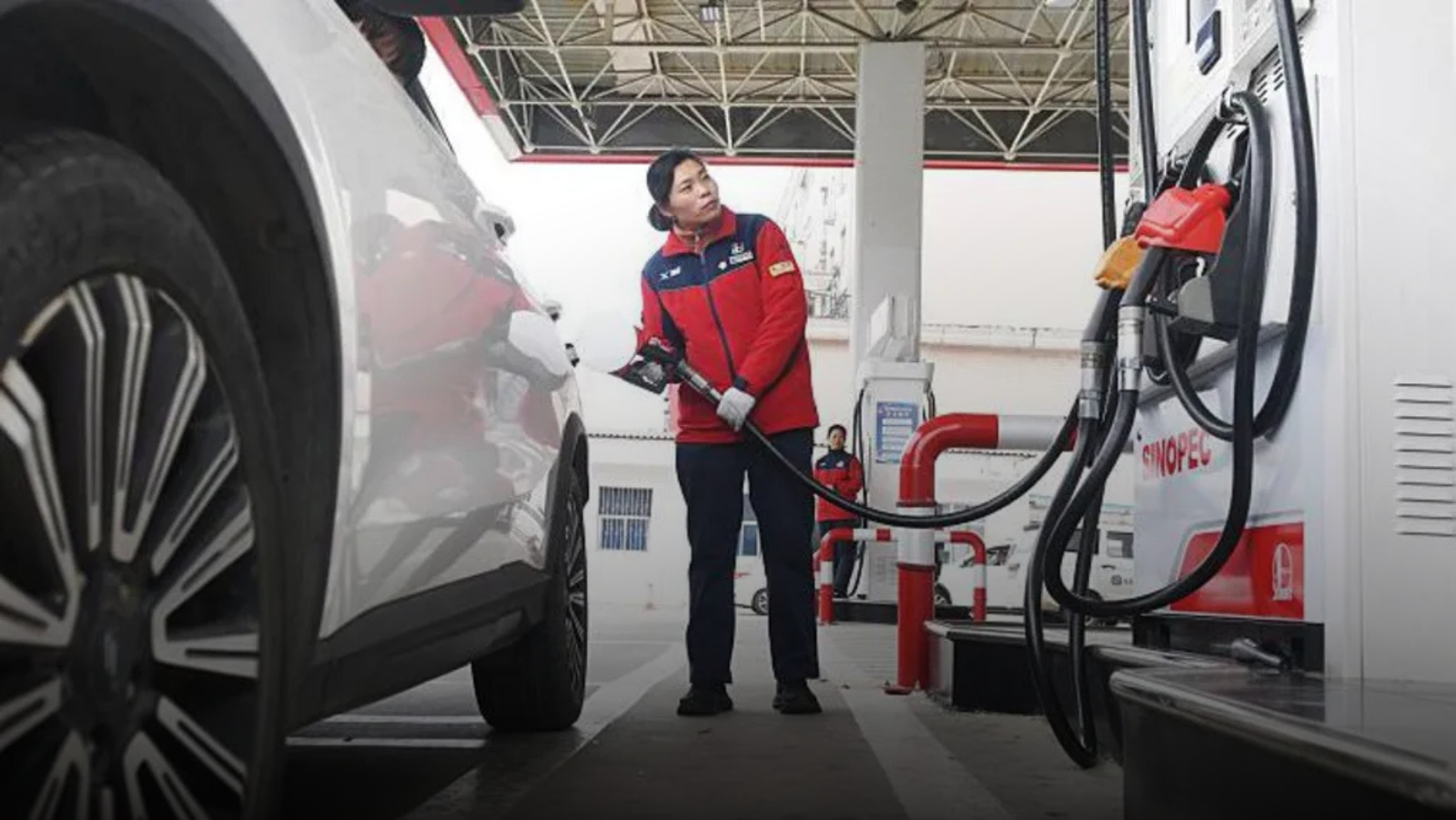
Government Moves to Reduce Driver Burden Amid Soaring Costs
BEIJING – China has moderated planned increases in petrol and diesel prices to ease the financial pressure on millions of motorists, following sharp spikes in global energy costs linked to the ongoing Iran conflict.
Authorities announced that the original fuel price hikes – set at 2,205 yuan per tonne for gasoline and 2,120 yuan per tonne for diesel – would now be almost halved, with increases of 1,160 yuan and 1,115 yuan respectively starting Tuesday. This marks the fifth and largest adjustment of the year, despite the reduction, reflecting China’s careful approach to domestic energy management.
With over 300 million vehicles dependent on petrol and diesel, the policy aims to prevent widespread economic strain while maintaining energy availability amid volatility in the international oil market.
How the Iran Conflict Is Driving Up Global Fuel and Energy Costs
The Iran war has disrupted one of the world’s busiest oil routes, the Strait of Hormuz, which handles nearly 20 percent of global crude shipments. These tensions have contributed to a nearly 20 percent increase in local petrol prices since the onset of the conflict.
China relies heavily on Gulf states and Iran for oil imports, with reports indicating that the country purchases over 80 percent of Iran’s crude exports. To maintain stability, Beijing has previously capitalized on lower prices to build substantial reserves, totaling approximately 900 million barrels of crude oil and 1.4 billion barrels of refined petrol, according to Columbia University estimates.
Domestic Measures to Stabilize Fuel Supply
To contain domestic price increases, the Chinese government reportedly instructed local oil refineries to temporarily suspend fuel exports. The National Development and Reform Commission (NDRC), responsible for monitoring and adjusting fuel prices every ten days, cited abnormal global oil price surges as the reason for implementing these temporary measures.
“The government stated that temporary rules have been introduced to manage sudden global oil price spikes, protect consumers, and support steady economic activity.”
Consumer Behavior and Market Response
The recent price hikes triggered long queues at petrol stations across multiple Chinese cities, with some stations posting notices of fuel shortages. By partially reducing the planned increases, authorities hope to alleviate public frustration while ensuring fuel remains available to critical sectors and private consumers.
Broader Asian Responses to Rising Oil Prices
China’s efforts are mirrored by other Asian countries taking measures to cushion the blow from rising global energy costs. In the Philippines, government employees are shifting to a four-day workweek, while Sri Lanka has declared Wednesdays as public holidays to reduce fuel consumption. Thailand and Vietnam have encouraged remote work, and Thai civil servants have been instructed to avoid lifts, wear lighter clothing, and suspend overseas travel.
Meanwhile, Sri Lanka’s private bus operators went on strike demanding higher fares to offset rising fuel costs. In the Philippines, over 20 transport groups announced a nationwide strike on March 26–27 to protest high fuel prices.
Japan and South Korea Face Acute Energy Pressure
Japan and South Korea are particularly vulnerable due to their reliance on oil and gas passing through the Strait of Hormuz. Gasoline prices in Japan surged to a record 191 yen per litre, an 18 percent increase from the previous week, according to the country’s Ministry of Economy.
South Korean President Lee Jae Myung directed public institutions to reduce passenger car usage and canceled plans to attend an international forum in China, emphasizing direct leadership in economic response measures amid the crisis.
Global Oil Market Volatility
The partial rollback in China comes as Brent crude prices briefly exceeded $100 per barrel, rebounding after a prior decline caused by uncertainty over potential U.S.-Iran talks. Analysts suggest that China’s fuel adjustments and its massive reserves provide a buffer, mitigating short-term market shocks while ensuring energy security.
Ole Hansen, head of commodity strategy at Saxo Bank, noted that Beijing has used low crude prices and Gulf supply abundance over the years to build one of the largest oil reserves globally, enabling the country to manage domestic fuel costs more effectively.
Strategic Importance of Energy Management
China’s strategy highlights the need for careful energy management amid geopolitical uncertainty. The partial price adjustment demonstrates how governments can balance domestic welfare with market realities, ensuring that citizens are not disproportionately affected while maintaining energy reserves for critical sectors.
By halving the planned fuel increases, authorities signal both a commitment to public welfare and an acknowledgment of the broader regional impact of the Iran conflict on oil prices.
Conclusion: Mitigating Energy Strain During a Crisis
China’s moderation of fuel price hikes reflects a pragmatic response to global oil volatility triggered by the Iran war. With millions of motorists impacted and energy markets under pressure, Beijing’s approach seeks to stabilize domestic supply, protect consumers, and maintain economic continuity.
At the same time, other Asian nations are implementing a variety of measures to reduce fuel consumption, underscoring the far-reaching influence of Middle East tensions on the region. As global energy dynamics remain uncertain, China’s policy adjustments serve as a model for proactive crisis management in the face of geopolitical disruption.