

Bahrain arrests Iran spies as Gulf security tensions escalate rapidly
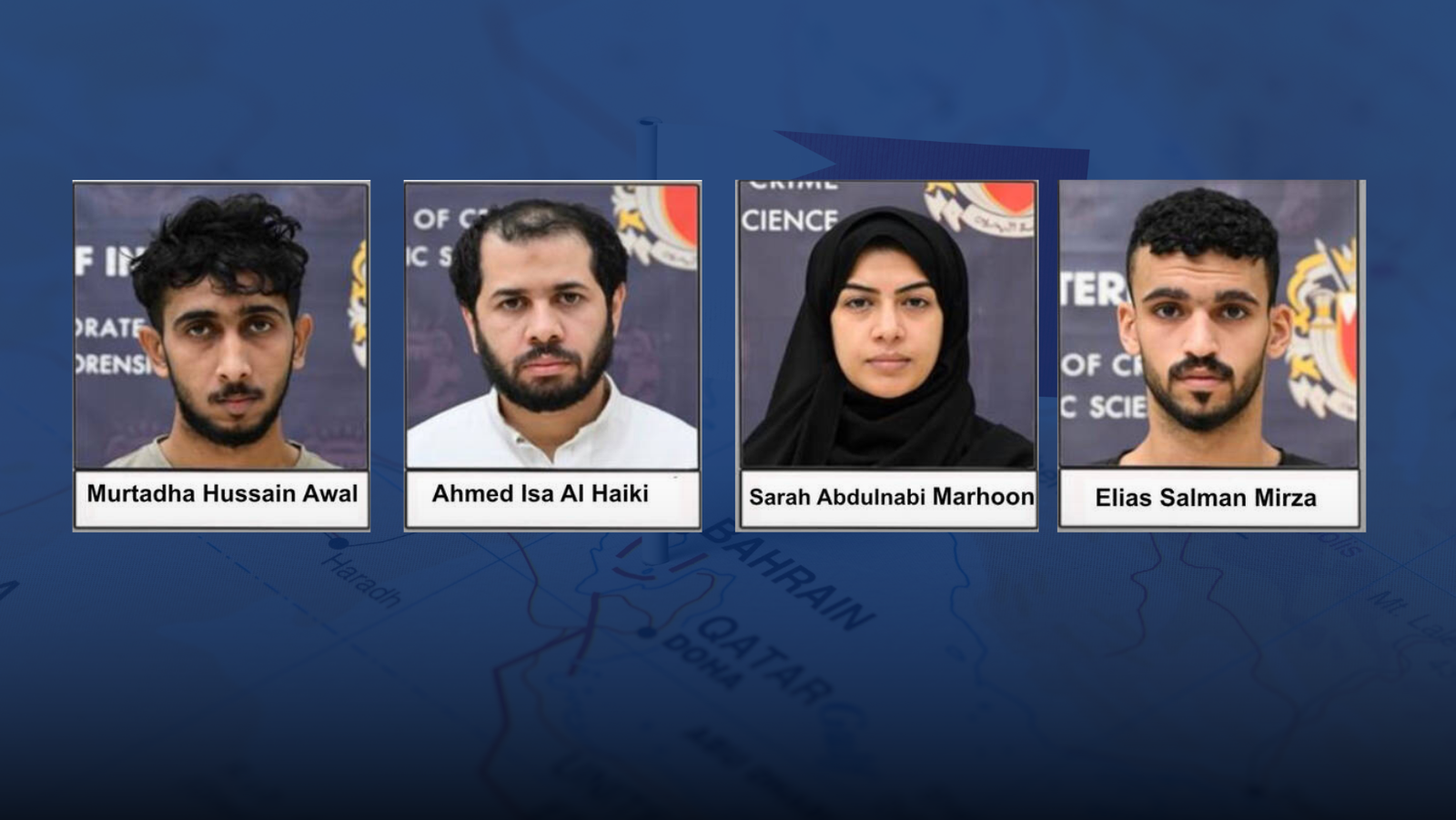
Four suspects detained in Bahrain for sharing sensitive data with Iran’s IRGC amid rising Gulf security threats
Manama, Bahrain — Authorities in Bahrain have detained four individuals accused of spying for Iran’s Islamic Revolutionary Guard Corps (IRGC) as tensions across the Gulf region continue to escalate. Investigators revealed that the suspects captured photographs and recorded coordinates of critical locations in Bahrain, sending the intelligence to Iran through encrypted channels.
The four individuals arrested are Murtadha Hussain Awal, 25; Ahmed Isa Al Haiki, 34; Sarah Abdulnabi Marhoon, 36; and Elias Salman Mirza, 22. A fifth suspect, Ali Mohammed Hassan Al Shaikh, 25, remains at large and is believed to be outside the country. Officials confirmed that the detainees acted under the guidance of the IRGC, targeting sensitive military and infrastructure sites.
Authorities indicated that high-resolution cameras and specialized equipment were used by the suspects to photograph and map vital installations. This information was then transmitted to Iranian command through encrypted messaging software, potentially aiding the ongoing missile and drone strikes in the Gulf.
The arrests come amid a sharp increase in Iranian attacks on Gulf states. In Bahrain, the Interior Ministry advised residents in Hidd, Arad, Qalali, and Samaheej to remain indoors and seal windows due to smoke from fires caused by the strikes. Fuel storage tanks in Muharraq Governorate were among the targets hit, prompting emergency response measures. Oman also faced fire outbreaks at fuel storage facilities in its Port of Salalah following separate Iranian drone attacks.
In the UAE, two Iranian drones fell near Dubai International Airport, injuring four people. Despite this, flights continued to operate with limited disruptions. Dubai Creek Harbour saw a fire in a high-rise apartment tower caused by another drone, which was quickly extinguished by emergency services. Meanwhile, commercial shipping lanes in the Gulf and the world’s busiest airports remain under heightened alert as regional military operations continue.
The conflict in the region began on February 28 when US and Israeli forces carried out coordinated strikes on Iran. Tehran has since retaliated with missile and drone attacks against Gulf countries, US and Israeli targets, and critical energy infrastructure. Iran has imposed an effective blockade on oil and gas shipments through the Strait of Hormuz, a key chokepoint for global energy flows, causing a spike in commodity prices and heightened international concern.
Financial reports suggest that the first week of conflict cost the United States over $11 billion, including $5 billion in munitions used in the opening weekend of the hostilities. The economic impact is being felt globally, with oil markets and shipping routes particularly affected.
On March 12, the United Nations Security Council passed a resolution demanding Iran halt its attacks on Gulf states immediately. Bahrain’s UN Ambassador, Jamal Alrowaiei, welcomed the resolution, emphasizing that it demonstrates the international community’s determination to protect regional stability. He also highlighted the importance of safeguarding energy resources and international trade in the Gulf region.
Despite international condemnation, Iranian attacks have continued. Regional authorities have imposed precautionary measures, including partial airspace closures and heightened security at key infrastructure sites. The Bahraini army has been deployed to patrol strategic energy installations, a move the government describes as a reassurance to the public, while critics argue it is meant to heighten fear amid the political tension.
The arrests in Bahrain mark a significant development in Gulf security. Authorities have confirmed that the suspects intended to provide the IRGC with actionable intelligence on locations essential to national security. The fifth suspect, currently at large, is being actively pursued by Bahrain’s law enforcement agencies in coordination with international authorities.
Emergency measures in Bahrain include advisories for residents in affected areas to remain indoors and avoid non-essential travel. Firefighting and security teams have been mobilized to prevent further damage from drone or missile strikes. Oman and the UAE are following similar safety protocols in response to Iran’s ongoing attacks.
The Gulf region continues to face uncertainty as commercial air traffic, shipping, and energy operations remain at risk. Airports in the UAE and Bahrain are operating under restricted schedules, with airlines coordinating repatriation and cargo flights where feasible. Authorities have urged travelers to stay updated on airline communications before attempting to travel.
Regional governments are also coordinating with international partners to monitor threats from Iranian forces and prevent further escalation. Security analysts warn that the ongoing situation could affect global oil markets, shipping routes, and regional economic stability if attacks continue unabated.
Experts note that the conflict illustrates how intelligence operations, like the spying case in Bahrain, are directly linked to regional military actions. By targeting critical infrastructure and sharing sensitive information with the IRGC, the suspects posed a serious threat to national security and civilian safety.
The United Nations resolution underscores the urgency of halting Iran’s attacks, but on the ground, Gulf states remain vigilant, implementing defensive measures and keeping citizens informed of potential risks. The arrests in Bahrain reflect a broader effort to counter espionage and secure critical infrastructure during this volatile period.
As the situation unfolds, residents across the Gulf are advised to remain aware of emergency alerts, follow guidance from local authorities, and exercise caution in areas near strategic infrastructure. Governments are continuing diplomatic efforts to resolve tensions while simultaneously maintaining high-security readiness.
The Bahrain case also highlights the expanding role of cyber and intelligence warfare in modern conflicts. Use of encrypted communication, high-resolution reconnaissance, and coordination with foreign military actors represents a growing threat to regional stability, prompting Gulf states to tighten security protocols and invest in surveillance and counter-intelligence measures.
With Iran’s attacks showing no signs of abating and regional governments stepping up defense and intelligence efforts, the Gulf remains on high alert. The international community’s support, including the UN Security Council resolution, reflects global concern about the potential consequences of the conflict, especially regarding energy security and trade in the strategically vital region.