
Thailand, Cambodia Announce Ceasefire After Weeks of Deadly Border Fighting
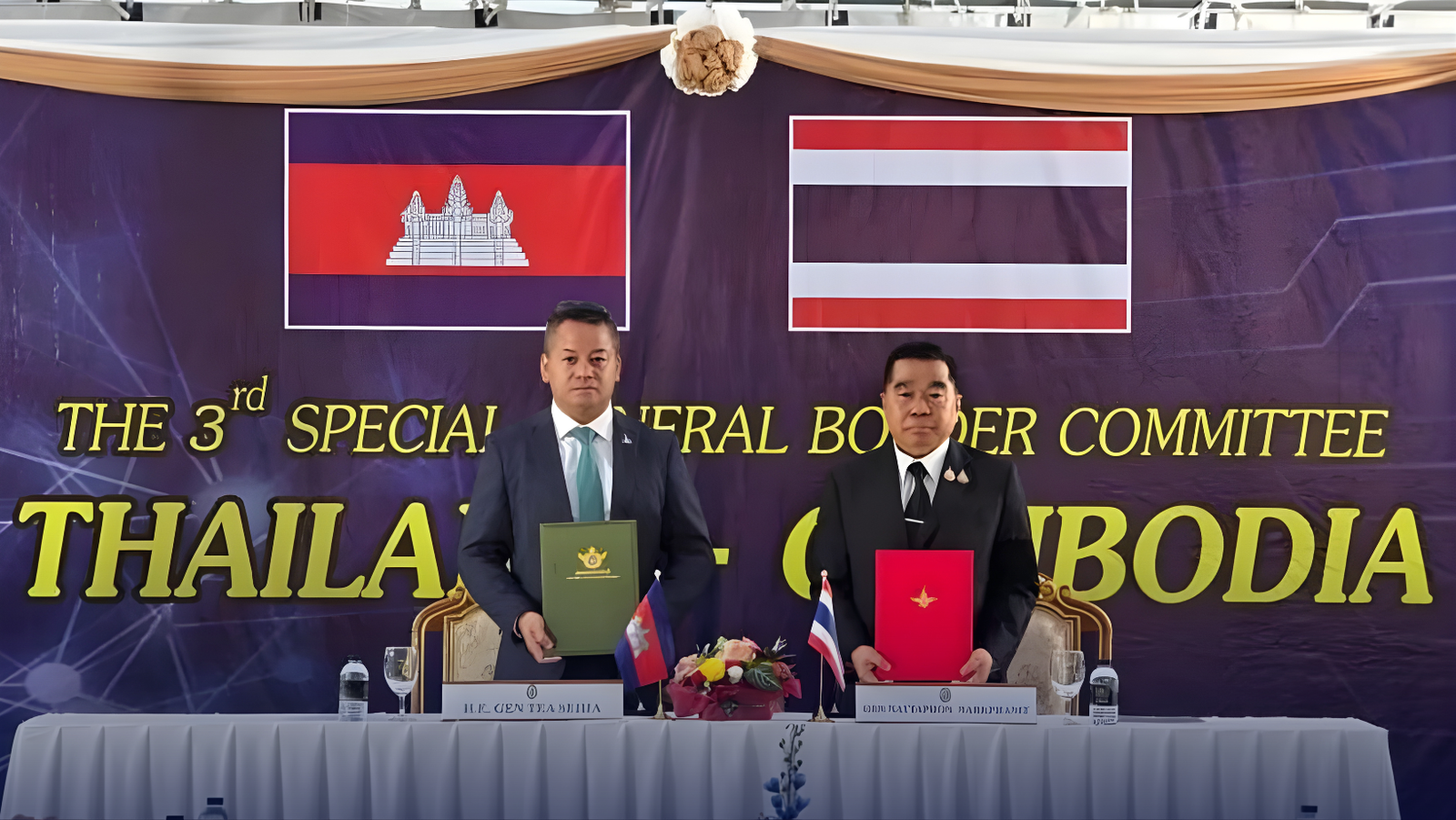
Thailand and Cambodia have agreed to an immediate ceasefire following nearly three weeks of intense fighting along their disputed border that left dozens dead and forced close to one million people from their homes.
The agreement, confirmed in a joint statement by the defence ministers of both countries, took effect at noon local time on Saturday. Under the deal, military forces will hold their current positions, allowing civilians displaced by the fighting to return to border communities.
The statement said Thailand will release 18 Cambodian soldiers detained since July once the ceasefire has held for 72 hours. Both sides also committed to clearing landmines and prioritising humanitarian access in affected areas.
The breakthrough followed days of negotiations supported by diplomatic efforts from China and the United States, though Washington played a less visible role than in previous talks.
Thailand’s Defence Minister Natthaphon Narkphanit described the ceasefire as a test of trust, warning that Bangkok reserves the right to defend itself if the agreement is violated.
“If the ceasefire fails or is breached, Thailand will exercise its legitimate right to self-defence under international law,” he told reporters.
Tensions between the two neighbours escalated earlier this year after long-running border disputes flared into open clashes. Both countries have repeatedly accused each other of initiating attacks, complicating efforts to secure a lasting truce.
The most recent fighting included air strikes by Thailand inside Cambodian territory on Friday. Thai officials said the strikes targeted fortified military positions after civilians had evacuated, while Cambodia accused Thailand of launching indiscriminate attacks on civilian areas.
Previous ceasefire efforts collapsed earlier this month after renewed exchanges of fire, with each side blaming the other. Nationalist sentiment has since intensified in both countries, raising concerns over the durability of the latest agreement.
The border dispute, which dates back more than a century, has repeatedly sparked tensions. Violence surged again after a clash in May killed a Cambodian soldier, followed by heavy fighting in July that caused widespread displacement.
While regional mediators hope the ceasefire will hold, analysts say long-standing grievances and recent battlefield losses could make a permanent peace difficult to achieve.