India and EU Move Closer to Landmark Trade Deal Amid Global Tariff Uncertainty
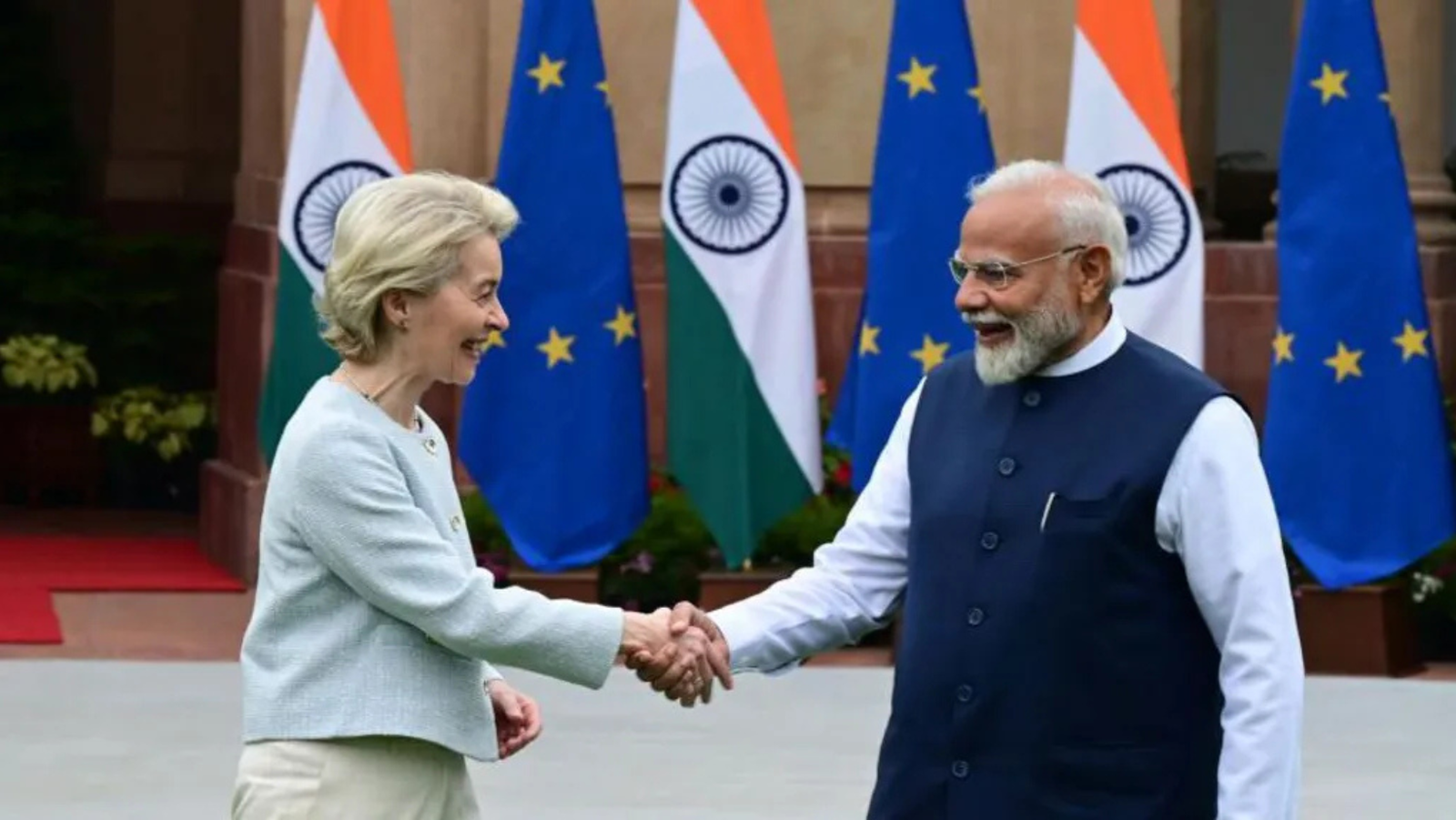
India and the European Union are moving closer to what leaders on both sides have described as a landmark free trade agreement, as global trade uncertainty grows and concerns over US tariff policies continue to loom large.
European Council President Antonio Luís Santos da Costa and European Commission President Ursula von der Leyen are set to attend India’s Republic Day celebrations next week as chief guests, underscoring the growing strategic importance of ties between New Delhi and Brussels. Beyond ceremonial events, the visit is expected to focus heavily on accelerating long-running trade negotiations between the two sides.
The timing is significant. Europe is navigating a tense geopolitical climate marked by renewed trade tensions and shifting alliances, while India faces continued uncertainty over steep US tariffs that have spilled into the new year. Against this backdrop, both sides appear keen to strengthen economic partnerships beyond traditional allies.
Diplomatically, the high-profile visit signals India’s intent to pursue a diversified foreign policy and deepen engagement with global partners, even as relations with Washington remain strained on trade matters.
Reports suggest the agreement could be announced as early as late January, when leaders from both sides meet for a high-level summit. Negotiations have been underway for nearly two decades, with officials now indicating that talks are approaching the final stages. Both European and Indian leaders have publicly emphasized the scale and strategic importance of the deal, calling it a defining moment for bilateral relations.
If concluded, the agreement would mark India’s ninth free trade pact in just four years, following recent deals with several major economies. For the European Union, it would add to a growing list of trade agreements aimed at strengthening economic resilience and reducing over-dependence on a small number of markets.
Analysts say the renewed momentum reflects a shared need for reliable trade partners at a time when geopolitics is increasingly disrupting global commerce. India is looking to offset the impact of higher US tariffs, while Europe is seeking to rebalance trade dependencies and diversify supply chains.
India’s economic rise adds to the appeal. The country is now the world’s fourth-largest and fastest-growing major economy and is expected to surpass $4 trillion in gross domestic product this year. Closer trade integration would create one of the world’s largest free-trade zones, covering nearly two billion people and a significant share of global economic output.
For New Delhi, the European Union is already its largest trading bloc. A new agreement would also restore preferential market access that was withdrawn in recent years, helping Indian exporters regain competitiveness in key sectors such as textiles, pharmaceuticals, steel, petroleum products and machinery.
At the same time, India is expected to shield politically sensitive sectors such as agriculture and dairy, while tariff reductions on items like automobiles, wine and spirits are likely to be phased in gradually — a strategy consistent with India’s approach in previous trade deals.
Despite the optimism, challenges remain. Europe continues to push for stronger intellectual property protections, tighter data regulations and clearer patent rules. India, meanwhile, has raised concerns over Europe’s new carbon-related border tax, which could impose additional costs on exporters even if import duties are reduced under the trade pact.
Industry groups warn that compliance requirements linked to carbon reporting could particularly impact small and medium-sized businesses, adding financial and administrative pressure.
Whether the agreement ultimately delivers balanced growth for both sides will depend on how these remaining issues are resolved. However, most analysts believe the long-term benefits outweigh the risks.
In the broader picture, the deal could help both India and the European Union reduce exposure to unpredictable trade policies, limit vulnerabilities in global supply chains and strengthen their strategic autonomy in an increasingly fragmented world economy.
As negotiations enter their final stretch, the proposed agreement is widely seen not just as a trade pact, but as a strategic statement about the future direction of global economic partnerships.